
ASIAN PEARS
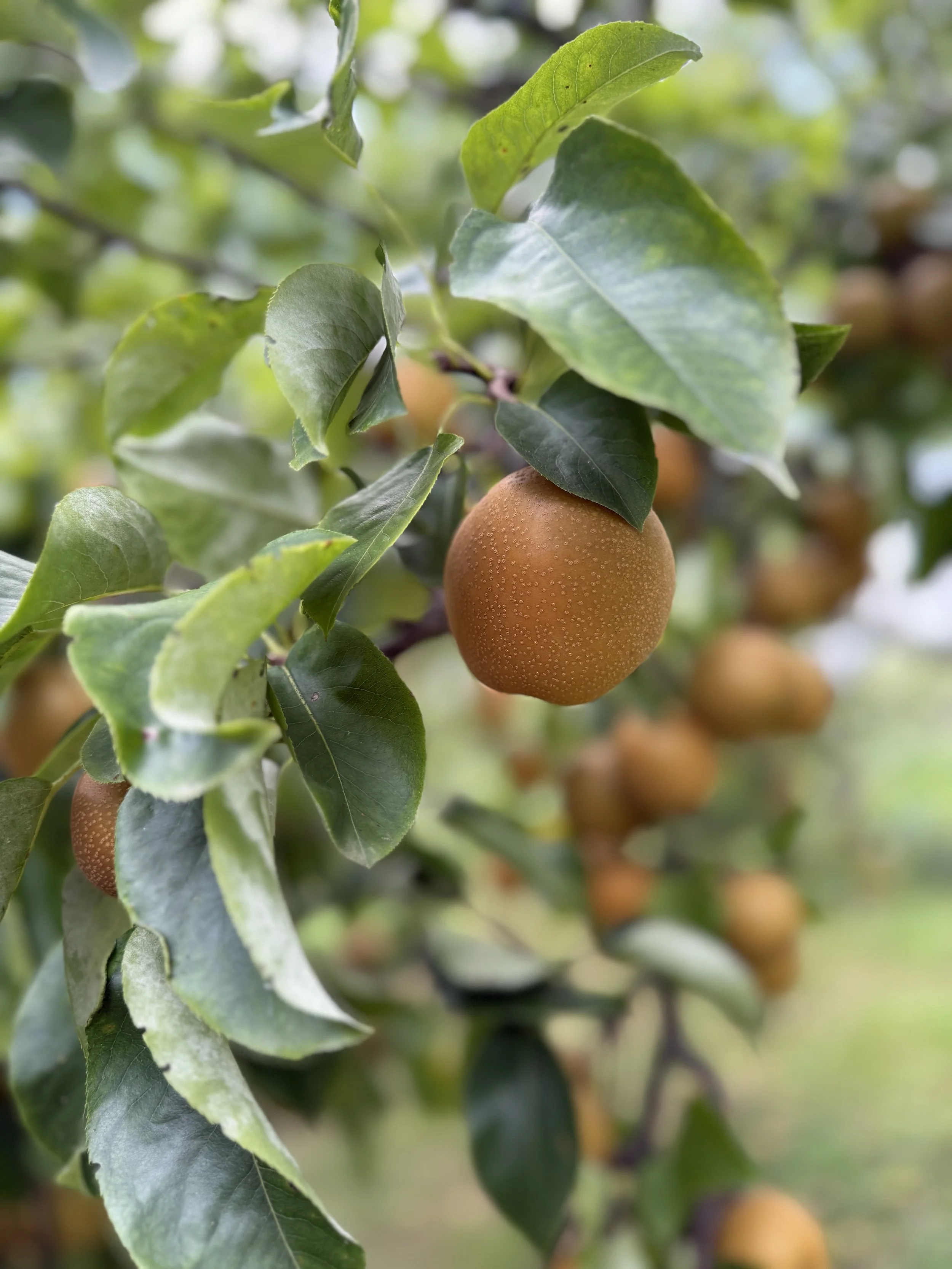
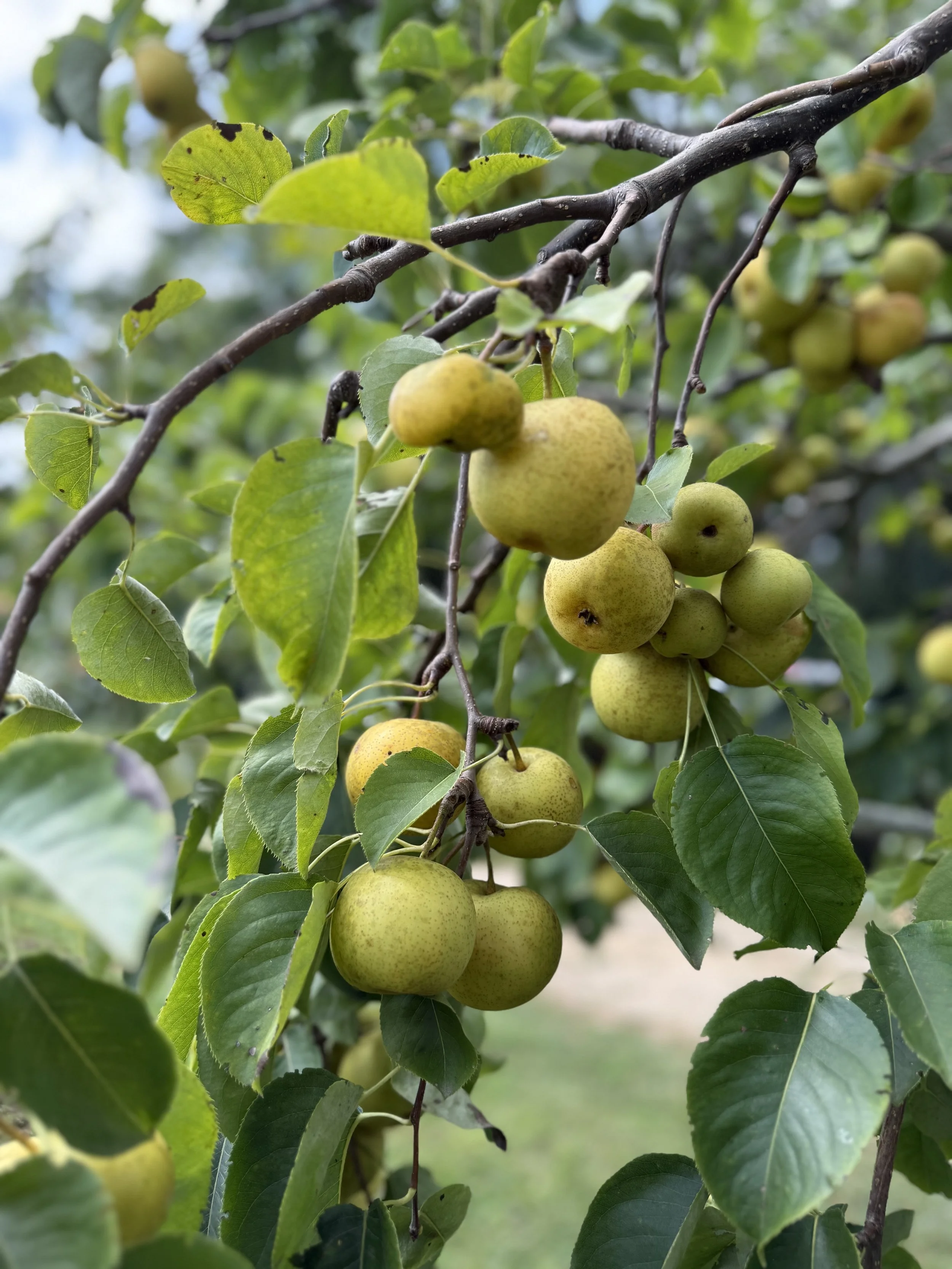
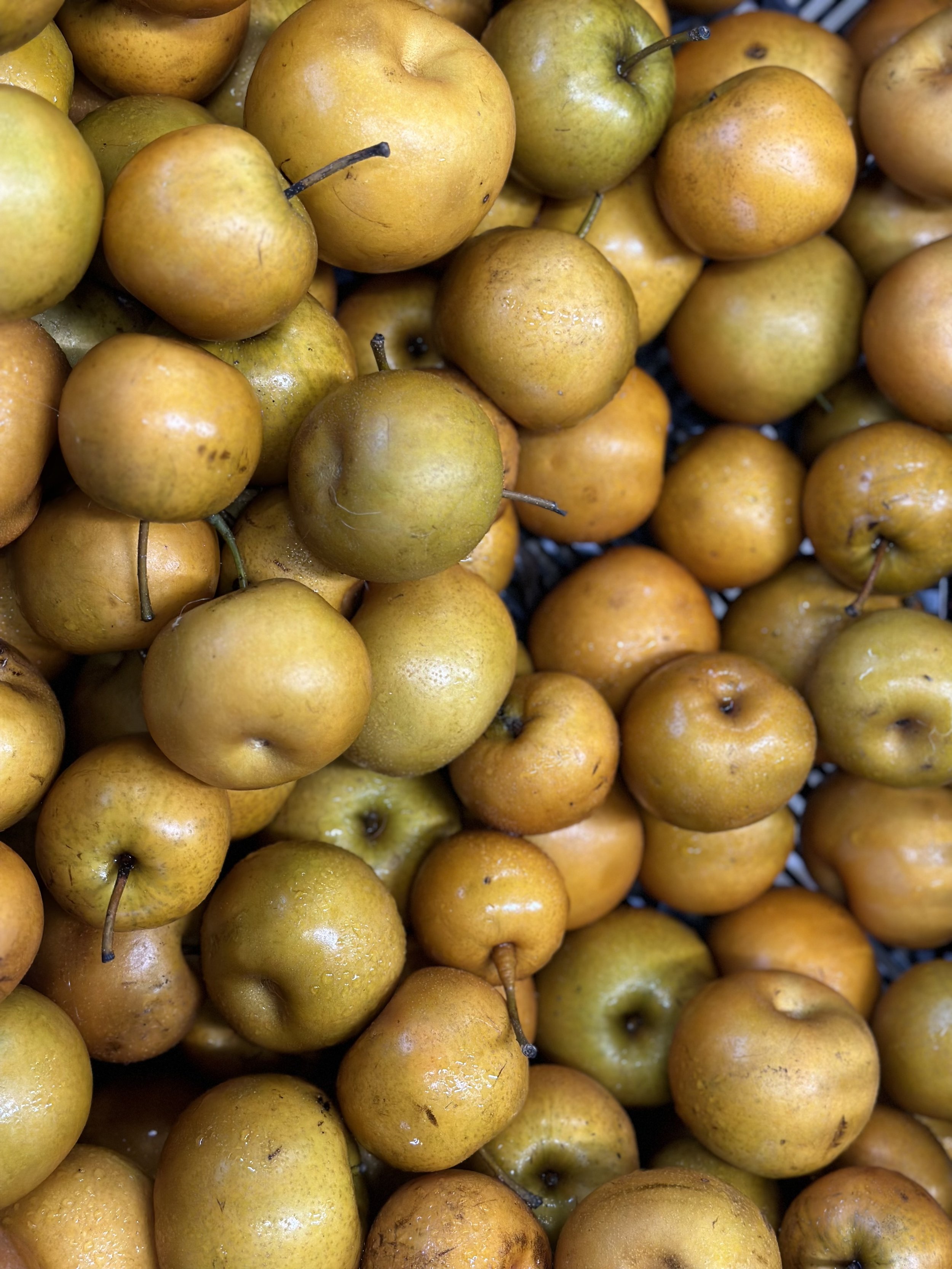
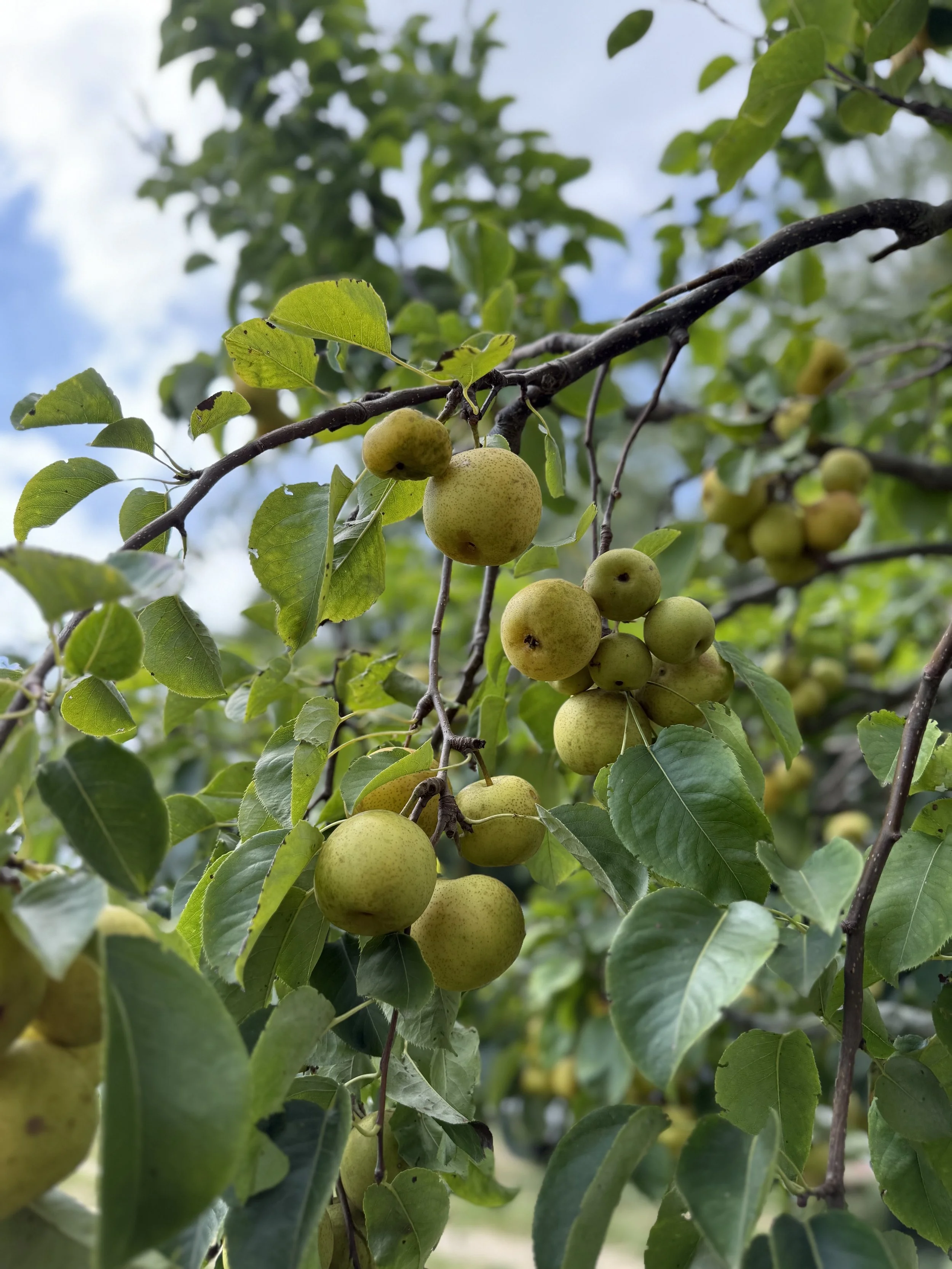
Asian Pears (Pyrus pyrifolia) are Native to Southern China and Japan and have been cultivated for over 3,000 years. The Asian Pear first appeared in the United States thanks to a horticulturalist from Flushing, Queens, but we can thank the widespread cultivation of the Asian Pear to Chinese miners and railroad workers from the California Gold Rush, and later Japanese immigrants between the 1840s to 1920s. Asian Pears are members of the Rosaceae or Rose family and are not self-fertile trees, meaning they produce fruit by cross-pollinating with other Asian Pear varieties. We grow Asian Pears and Golden Asian Pears, the latter being larger and dare we say sweeter!
In season: Late August to November
Nutritional value: Asian Pears are a great source (over 50% your DV) of polyphenols — a class of phytonutrients. They also contain vitamins C, K, B7 (biotin), as well as copper, manganese, and potassium!
Storage tips: Asian Pears are ripe when bronze in color, and Golden Asian Pears are ripe when they’re well, golden! Store unripe Pears on the counter, and once ripe, move them to your refrigerator.
Culinary uses: Asian Pears are enjoyed best raw for snacking! Due to their higher water content, they are not typically used as a substitute for other Pear varieties when baking. If you’re wanting to use them for baking, we recommend finding specific Asian Pear baked good recipes!