DILL
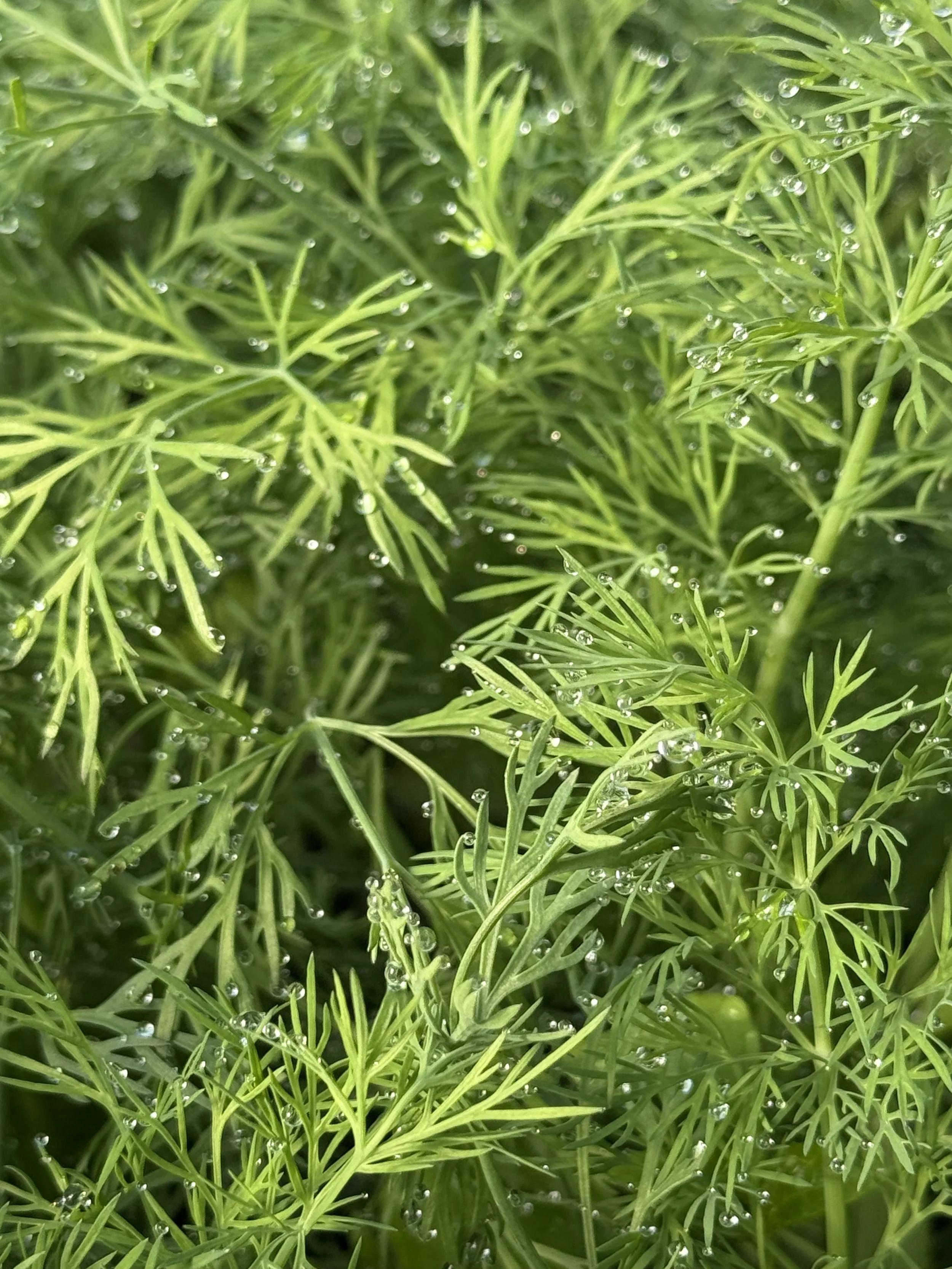
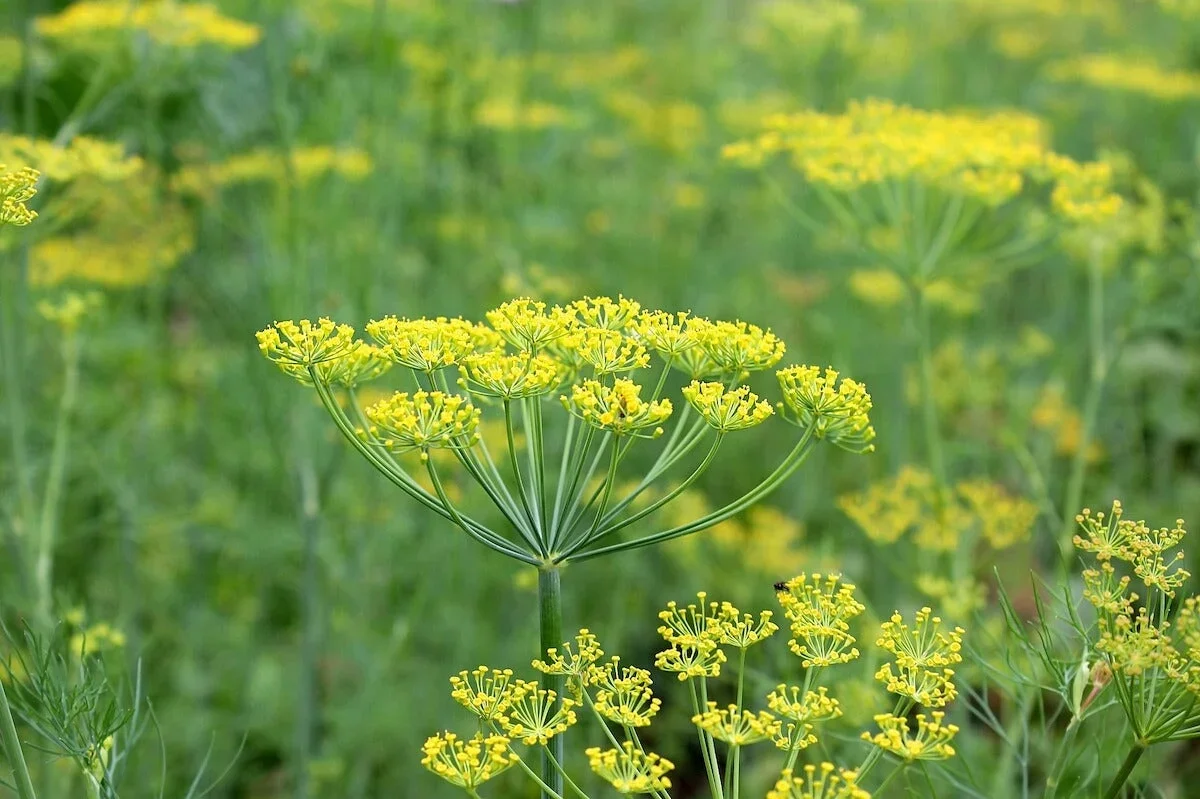
Dill (Anethum graveolens) is an annual herb in the Apiaceae (Celery) family cultivated for it’s leaves and seeds. Since Dill grows from a taproot like Carrots, it can grow to be over a foot tall! When Dill flowers, or bolts, it forms a grouping of yellow flowers called an umbel — these eventually dry and become the seeds. Since Dill becomes bitter and tough once it bolts, it makes growing it in the Summer months a bit difficult.
In season: April to September | sporadically
Nutritional value: Dill contains vitamins C and A, as well as manganese, folate, and iron. Dill is also high in flavonoids — powerful antioxidants that include quercetin and kaempferol.
Storage tips: If you’re using your Dill within a day or two, give the stems a fresh trim and immerse them in a jar of water. If you’re wanting to store your Dill a bit longer, wrap it in a paper towel and place in a sealed container or bag — just ensure that your Dill is completely dry before doing so! If you’re seeking long-term storage for your Dill, simply chop it up, toss it into an ice cube tray, top off with a high quality EVOO, and freeze! Once frozen, you can pop them from the stray and store in a ziploc or container in the freezer.
Culinary uses: Many view herbs as garnishes, but we challenge you to view it as just another vegetable. Of course you can still garnish your fish and potato salads, but you can also blend it into salad dressings, make pesto, add to pasta dishes, include it in tea… let your imagination run wild!