BABY BOK CHOY
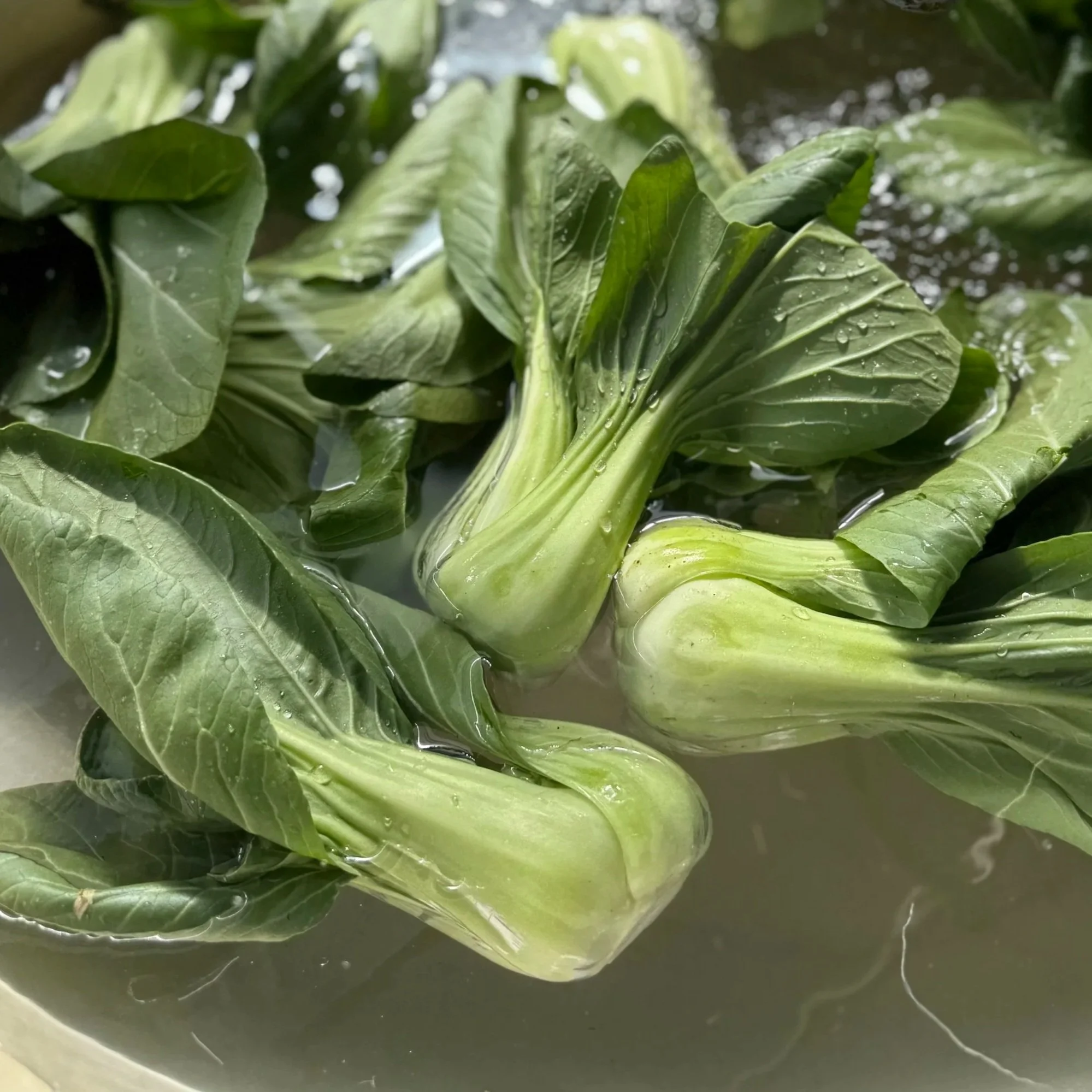
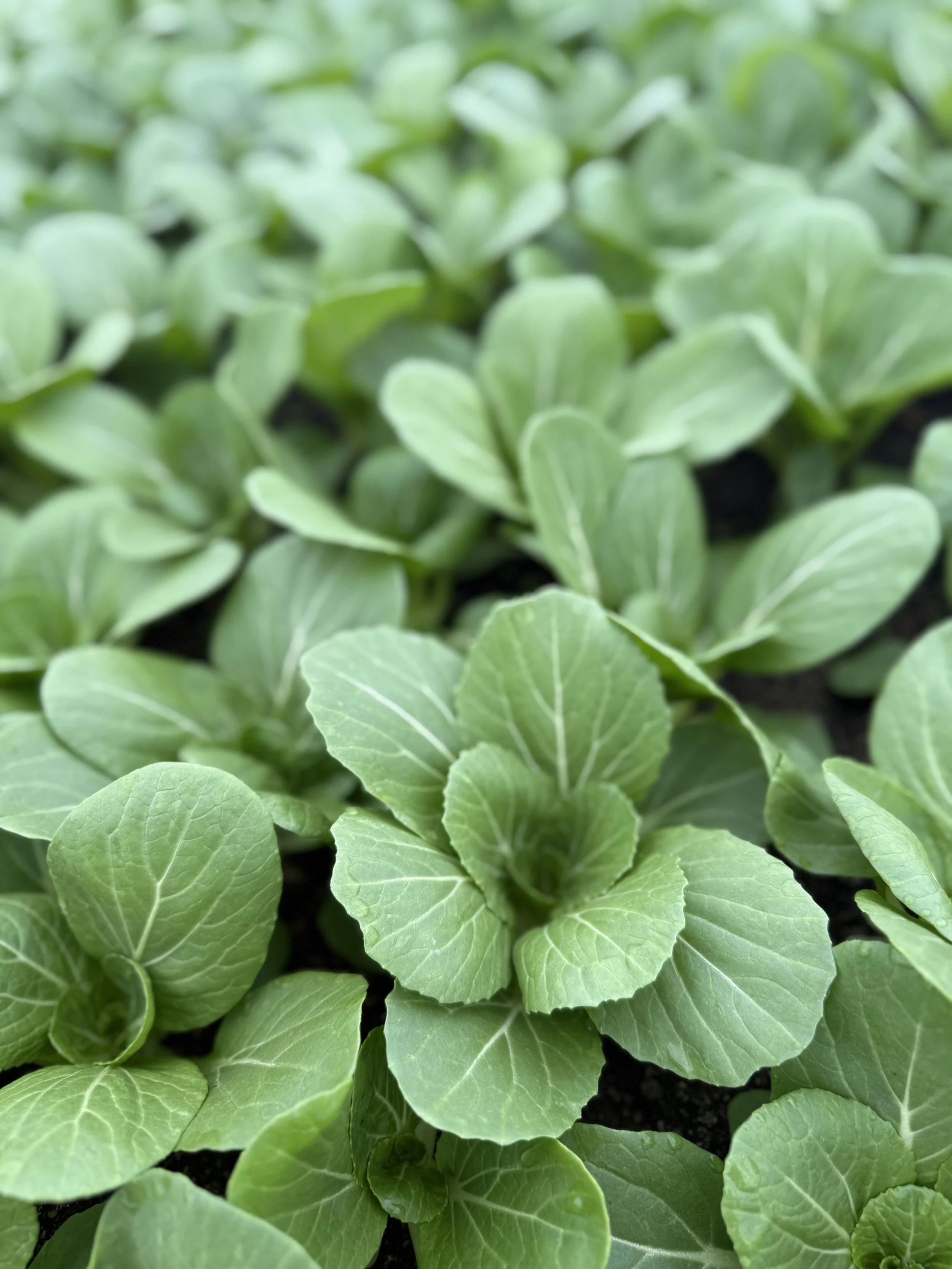
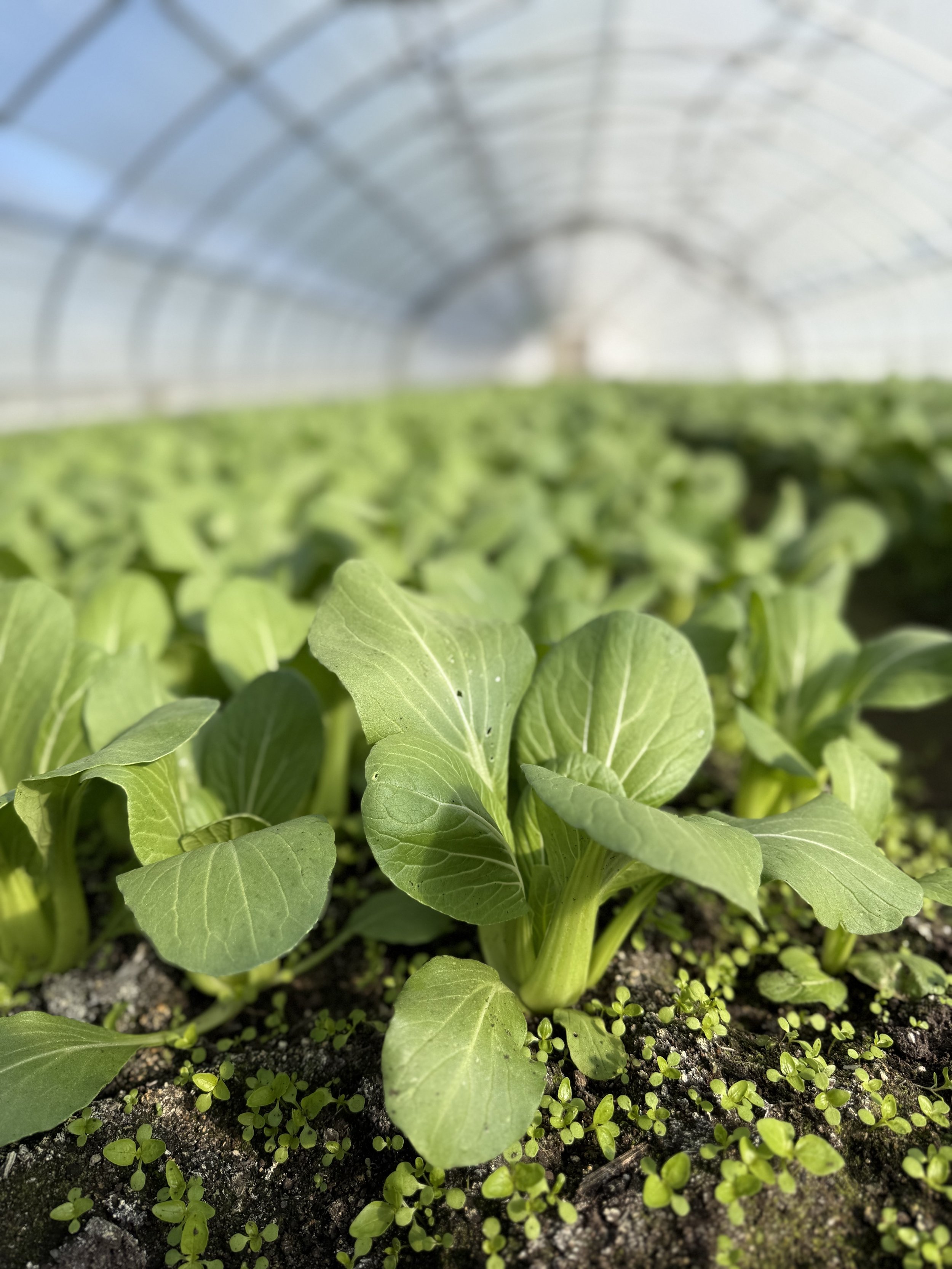
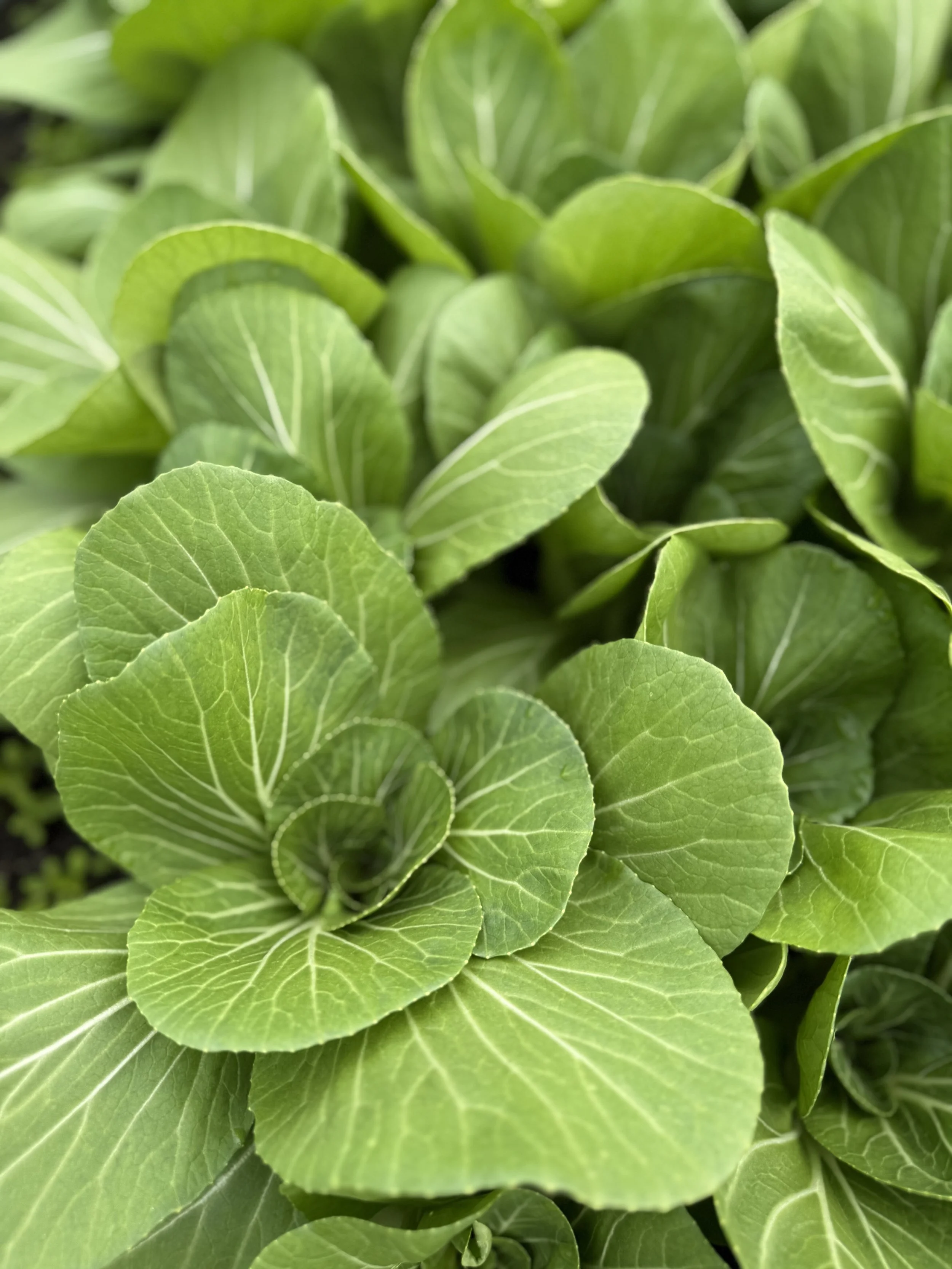
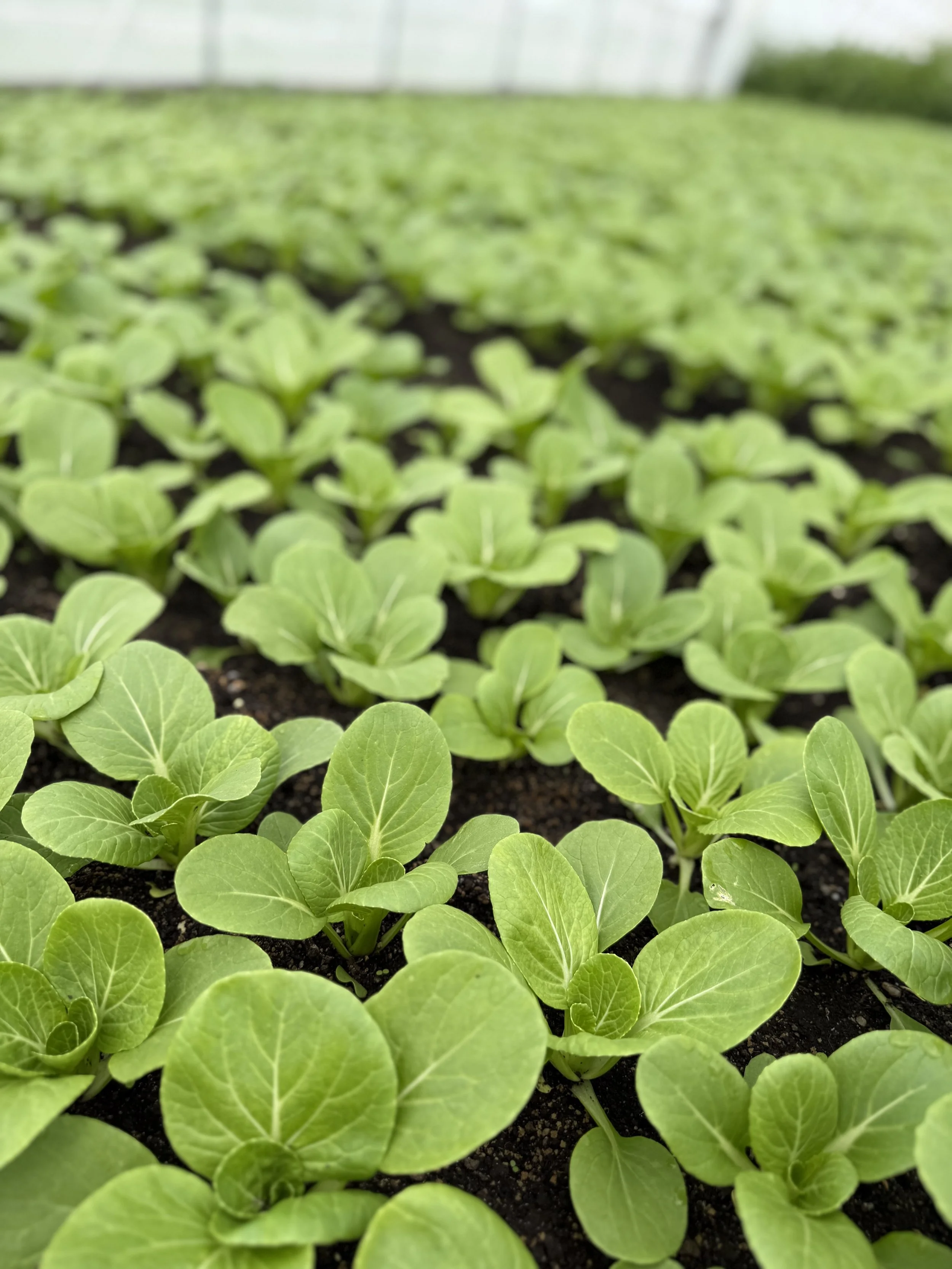
Baby Bok Choy (Brassica rapa), also called Pak Choi, is a type of Chinese Cabbage. In Cantonese, it is called siu bok choy, meaning small green vegetable. It’s origins trace back to China in the 5th century CE, where it was cultivated in the Yangtze River delta, one of the world's oldest agricultural regions! This cruciferous vegetable is recognizable due to its circular dark green leaves that look like stems that grow from the small rosettes, as well as juicy white leaf veins — and it’s our namesake! Delicious raw and cooked, this vegetable is not to be overlooked.
In season: April to December
Nutritional value: Baby Bok Choy is 95% water! On top of being hydrating, it contains vitamins A, B6, C (54% your DV!), and K, and minerals like calcium, potassium, magnesium, manganese, and iron. In Traditional Chinese Medicine, Bok Choy is used to help blood circulation and detox the body. It also contains folic acid, beta carotene, and fiber — talk about a powerhouse veggie!
Storage tips: For short-term storage, keep your Baby Bok Choy whole and unwashed, and place in an unsealed bag in your refrigerator's crisper drawer for up to 7 days. If you are storing them and want to maximize freshness, wrap the heads in a damp paper towel to maintain humidity, then place in an unsealed bag. You can also freeze Baby Bok Choy for use in stews and stocks by washing, blanching, and freezing!
Culinary uses: Every part of Baby Bok Choy is edible — from the external leaves, to the stem, to the inner leaves! Steam, grill, sauté, eat raw, ferment, add them into a soup or toss them into a stir fry! Think of it like any other leafy green, it goes great in curries, risottos, pasta dishes, casseroles, savory pancakes, omelets, dumplings, even smoothies! Consider classic flavor pairings like Ginger, Lemongrass, Garlic, or Sesame And Soy Sauce.