
CILANTRO
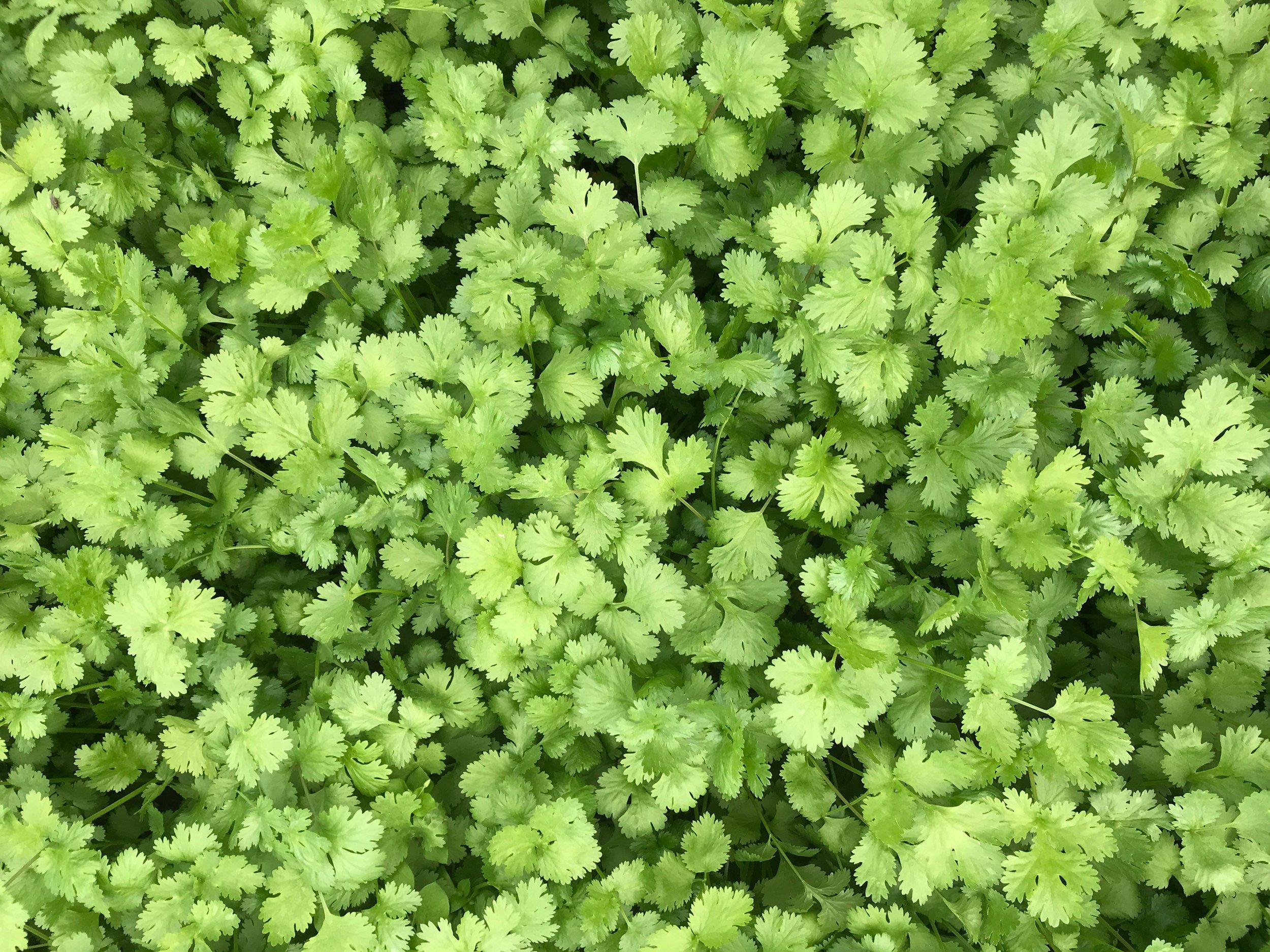
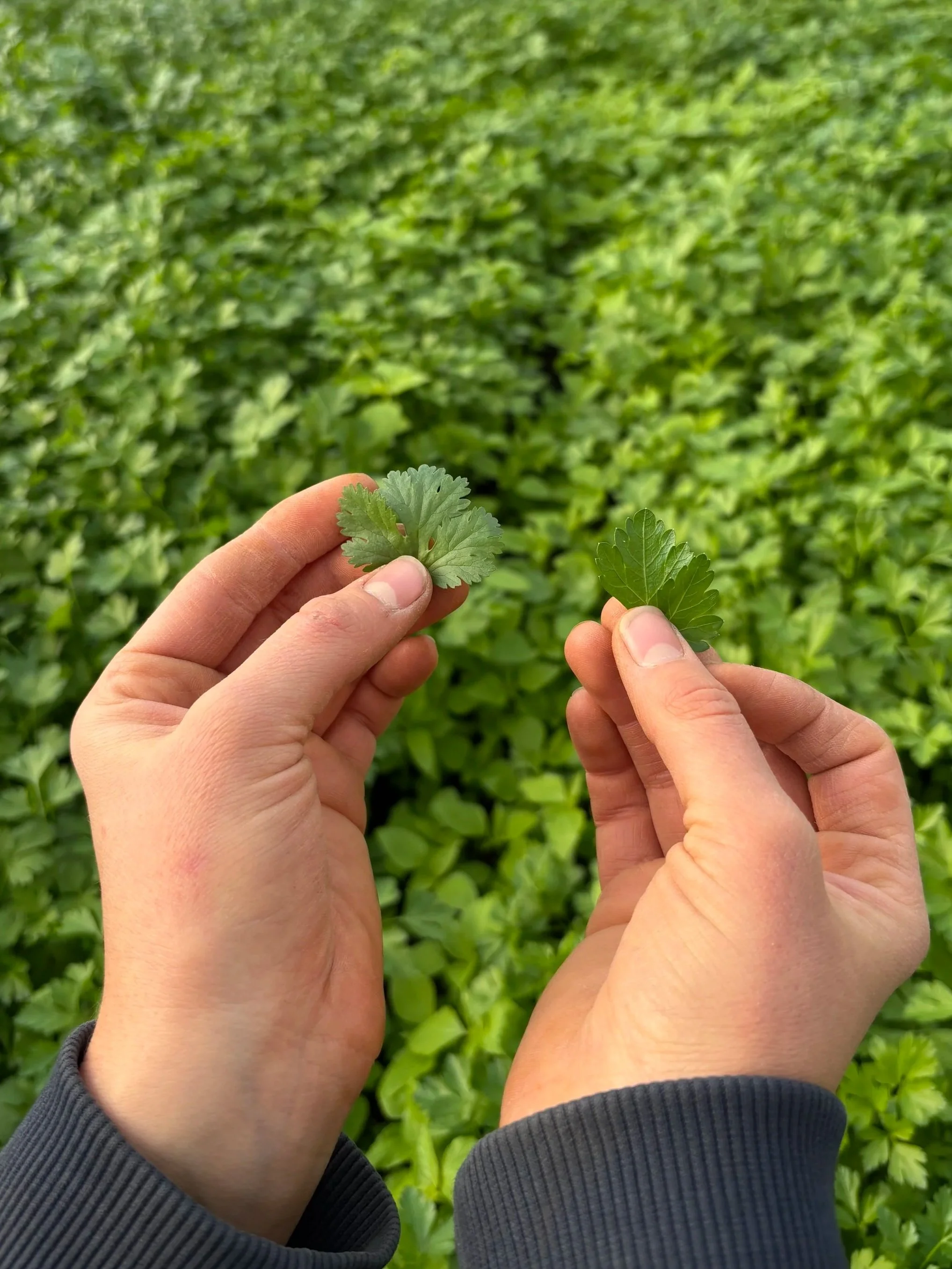
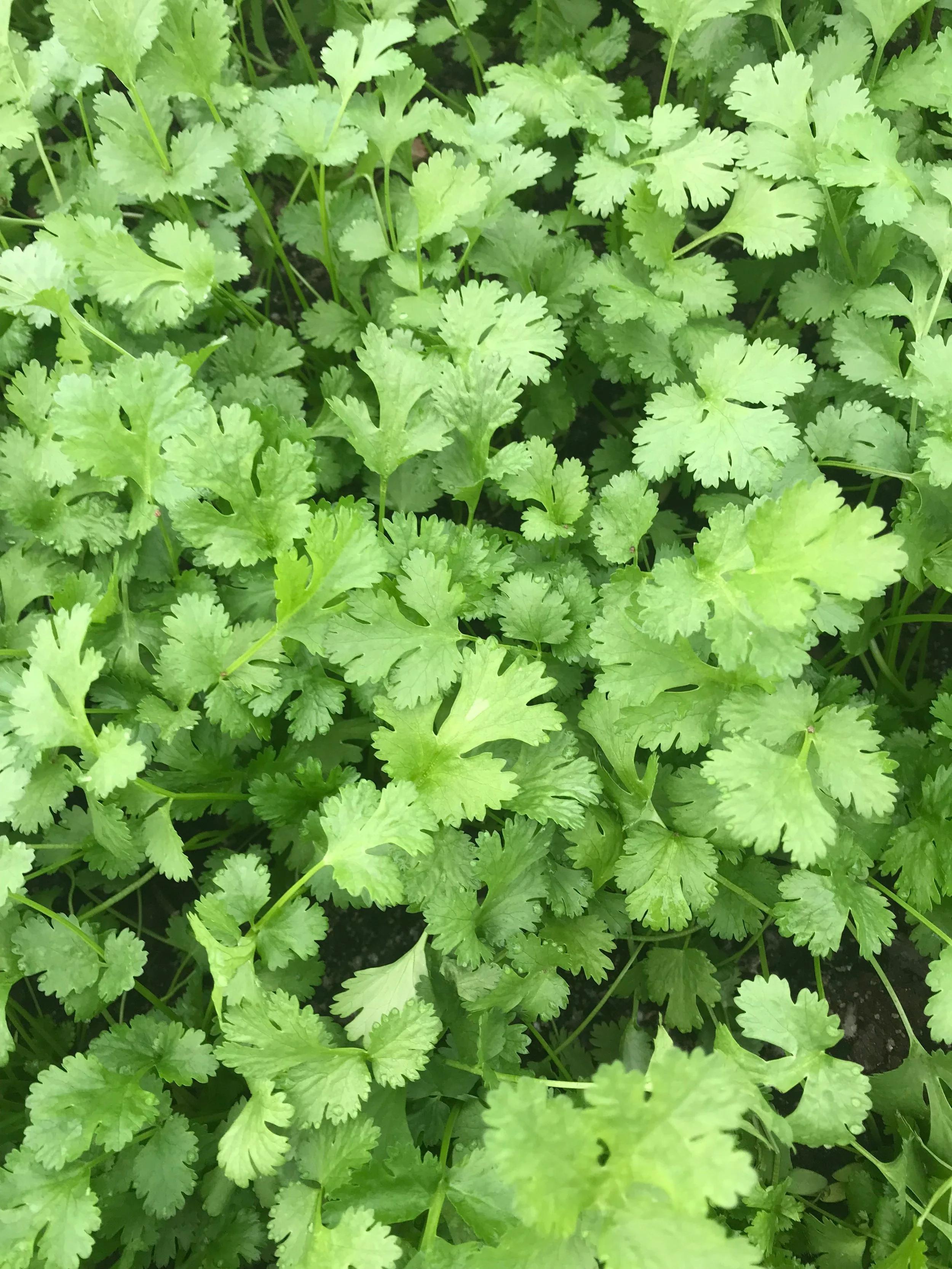
Cilantro (Coriandrum sativum) is a fast-growing annual herb from the Apiaceae family. Cilantro is actually the leaves and stems of the coriander plant, the seeds of which are used as a spice! It is know for it’s bright green and lacy leaves, and distinct aroma and flavor. Why do some people think Cilantro tastes like soap, you ask! The reason being variations in a group of olfactory-receptor genes — people with these variants are more apt to taste the soapy-flavored aldehydes in Cilantro leaves!
In season: April to November
Nutritional value: Cilantro contains vitamins A, C, and K, and the leaves also have folate, potassium, and manganese. Cilantro also contains enzymes that can reduce blood sugar!
Storage tips: If you’re using your Cilantro within a day or two, give the stems a fresh trim and immerse them in a jar of water. If you’re wanting to store your Cilantro a bit longer, wrap it in a paper towel and place in a sealed container or bag — just ensure that your Cilantro is completely dry before doing so! If you’re seeking long-term storage for your Cilantro, simply chop it up, toss it into an ice cube tray, top off with a high quality EVOO, and freeze! Once frozen, you can pop them from the stray and store in a ziploc or container in the freezer. Alternatively, you can make it into pesto and then freeze!
Culinary uses: What can’t you do with Cilantro is the real question! Many view herbs as garnishes, but we challenge you to view it as just another vegetable. Of course you can still garnish your tacos and curries, but you can also blend it into salad dressings, make pesto, add to salads, salsa, and stir-fry, and more. Get creative!