
GINGER
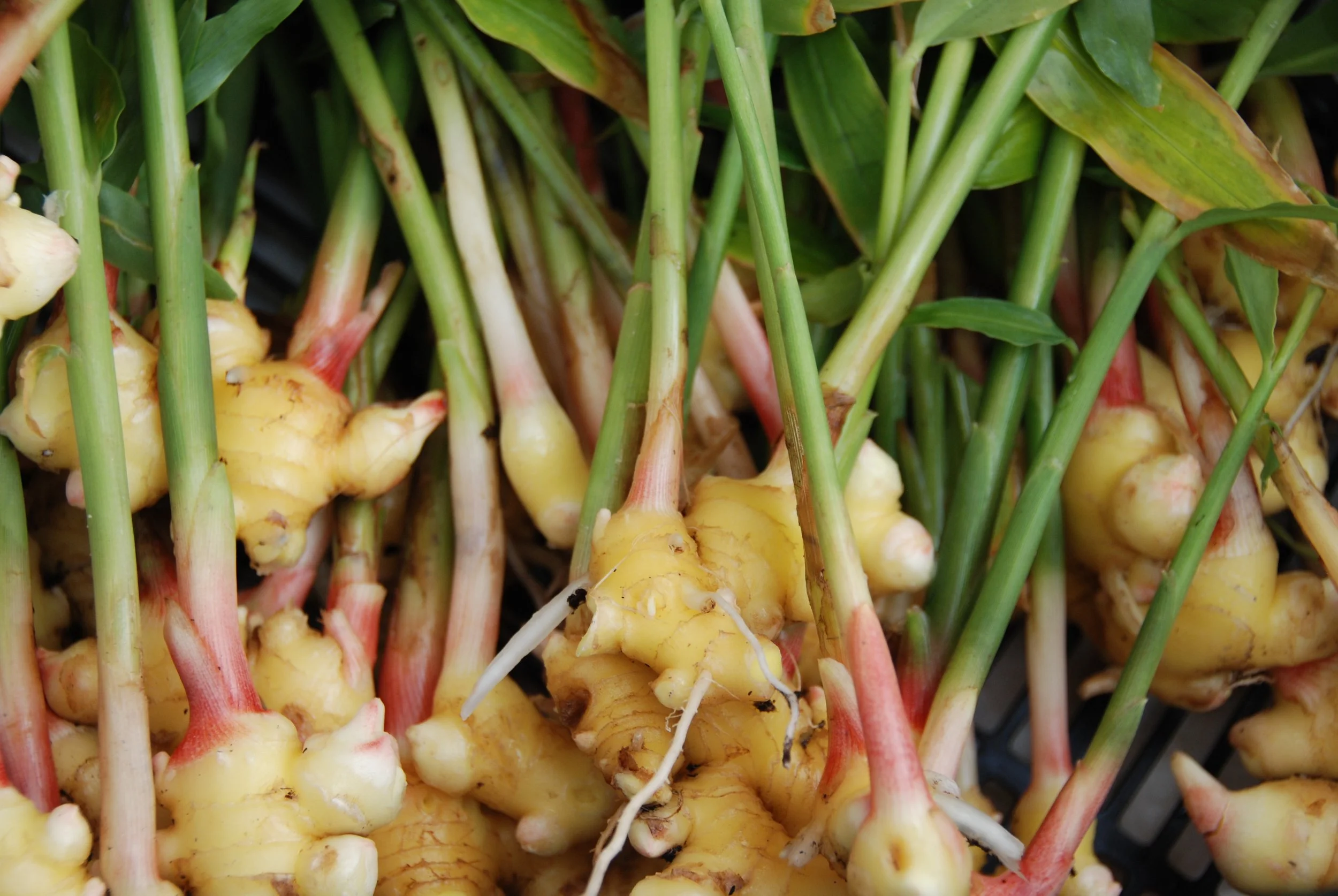
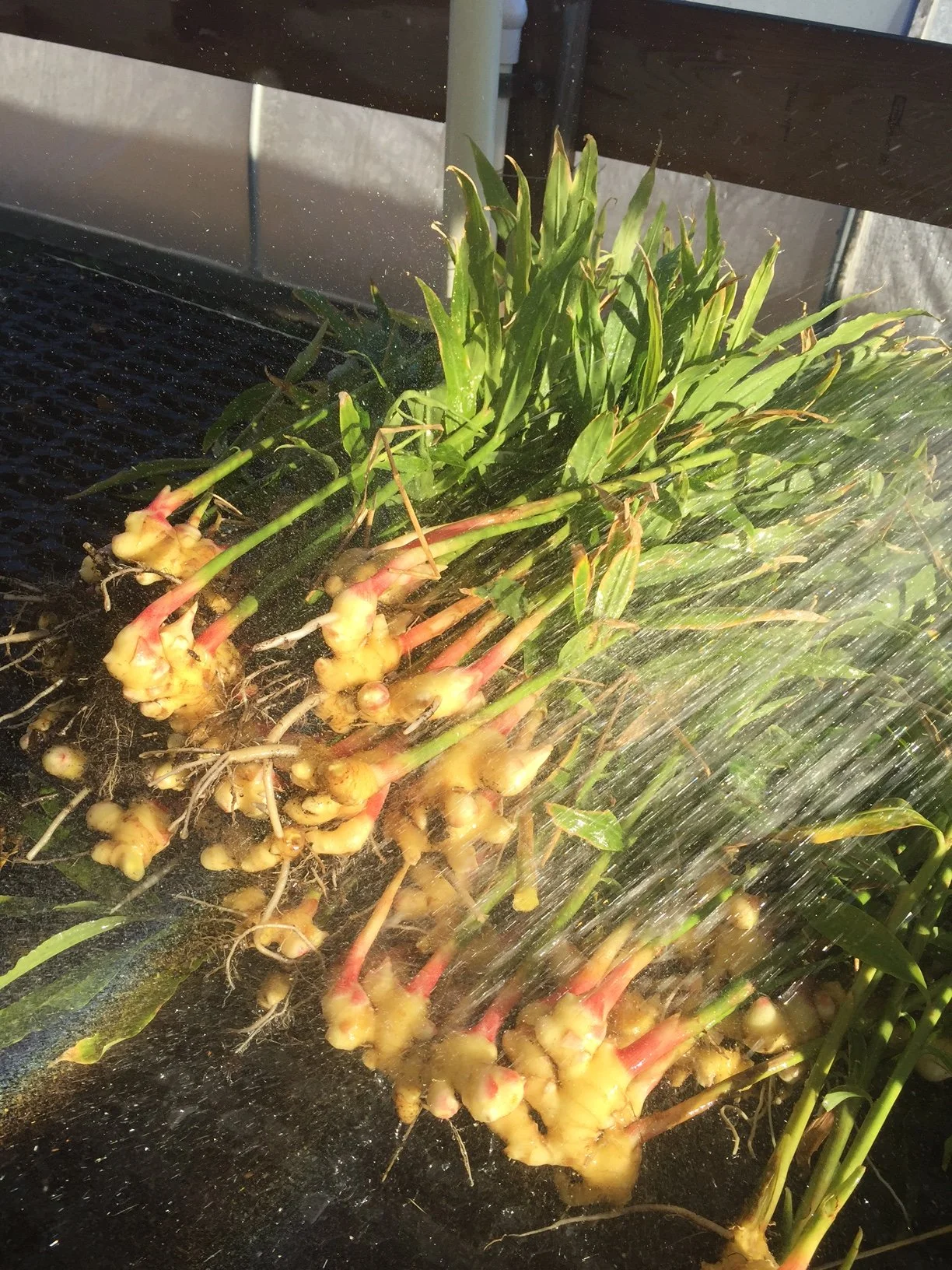
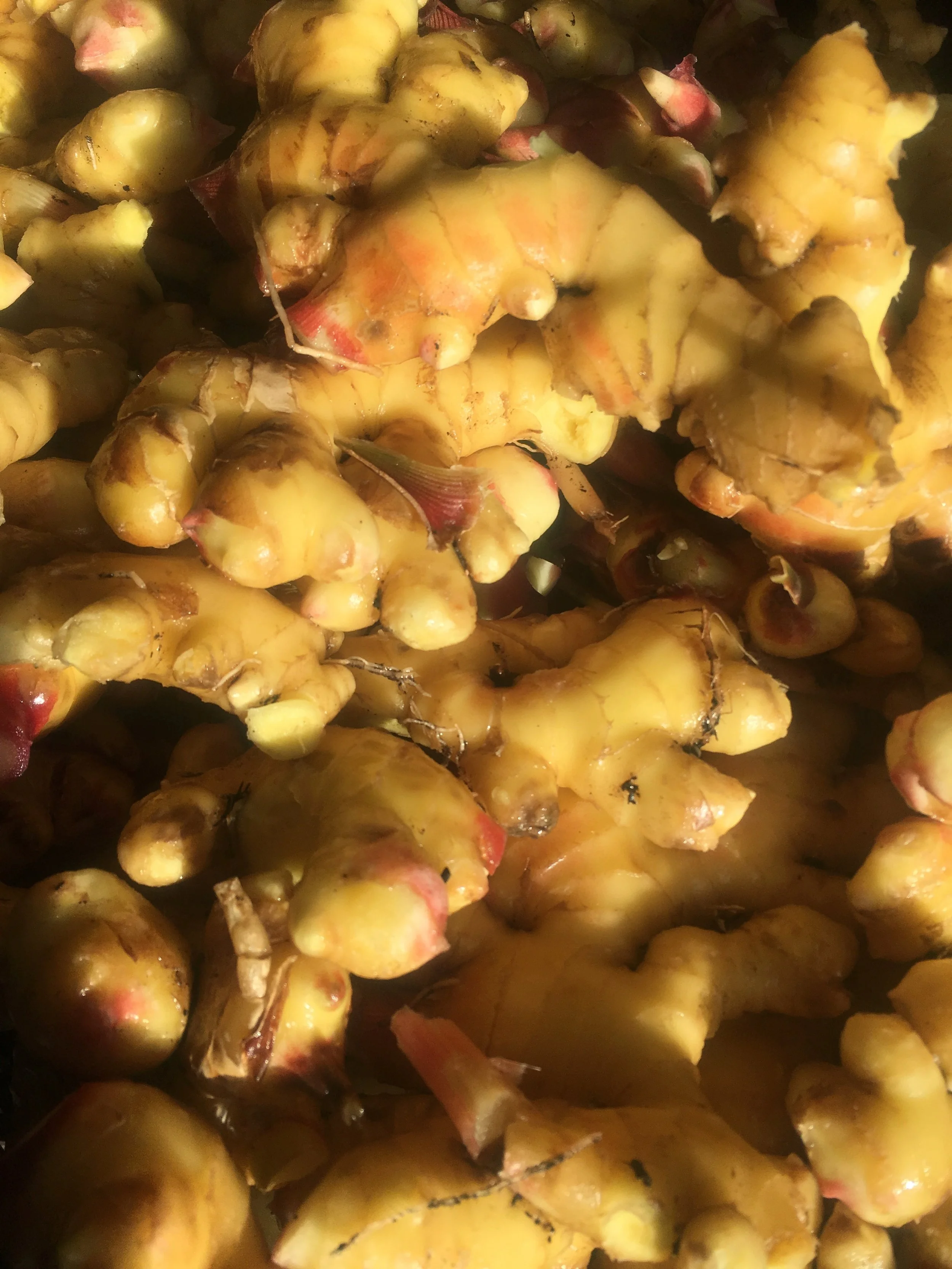
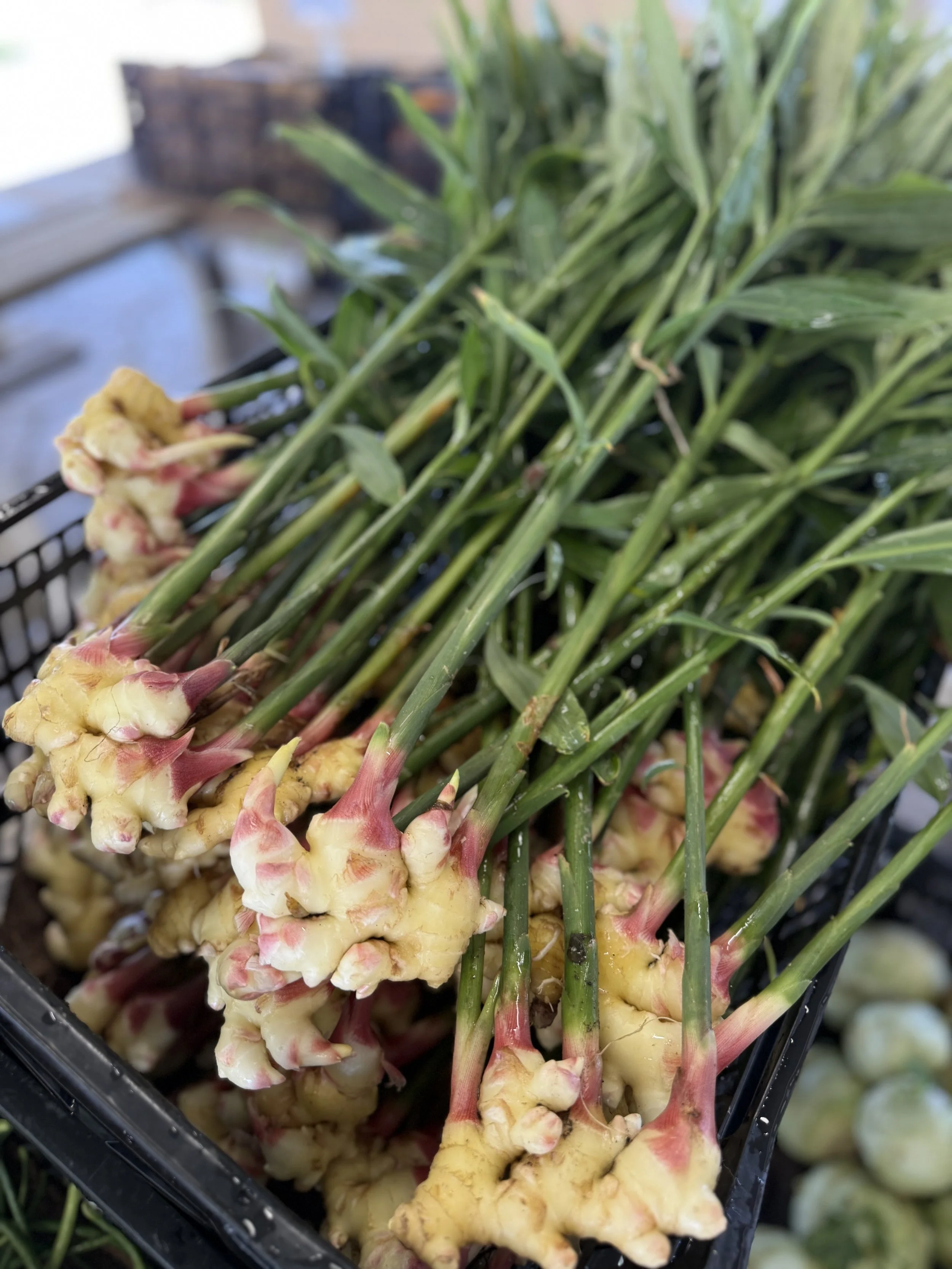
Ginger (Zingiber officinale) is an herbaceous perennial cultivated for its pungent aromatic rhizomes (the knobby underground roots). Ginger grows by being propagated from existing rhizomes — it has been cultivated this way for so long that it no longer bolts (goes to seed)! When we harvest our Ginger starting in late July, we sell it fresh with the stalks on! Fresh Ginger is less pungent then it’s cured self, and the stalks can be used for making fresh teas, broths, and stocks!
In season: Late July to Early October
Nutritional value: Ginger has been used for millennia in many traditional and alternative medicine settings due to gingerol, its main ailment-fighting compound. Gingerol is responsible for Ginger's unique fragrance and flavor, as well as its anti-inflammatory and antioxidant properties. Confucius himself famously insisted on having ginger at every meal to aid digestion!
Storage tips: Fresh (uncured) Ginger should be stored in the refrigerator, where it will store for a few weeks. Keep your fresh, unpeeled Ginger in the crisper drawer of your refrigerator wrapped in a dry paper towel inside an airtight bag. Note that the stalk may yellow when left to sit too long, so whip up a quick batch of Ginger tea (or add to broth or stock) before this happens! Alternatively, you can freeze fresh Ginger in chunks for up to 6 months — these make the perfect addition to broths or smoothies! Cured Ginger should be stored at room temperature, preferably in a cool, dark place — don’t store them near potatoes! When stored this way, Ginger can last for months.
Culinary use: Let your imagination run wild! Add to sautéed greens, stir-fry, soups, juices, dressings, the list goes on! The stalks, while too tough to eat by themselves, can be added to soups, stocks, broths and teas — we’re big fans of using as much of a plant as we can!