
KALE
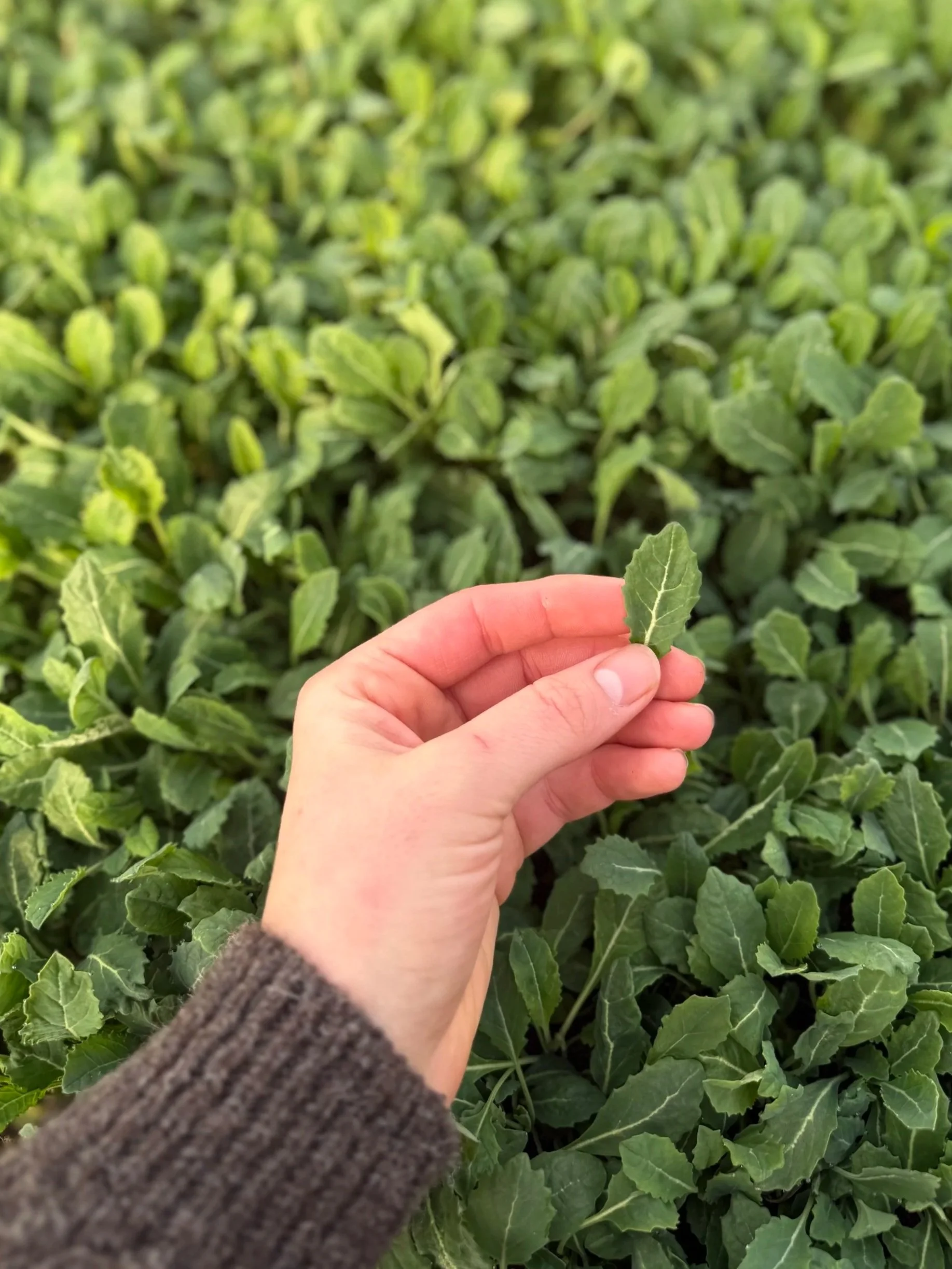
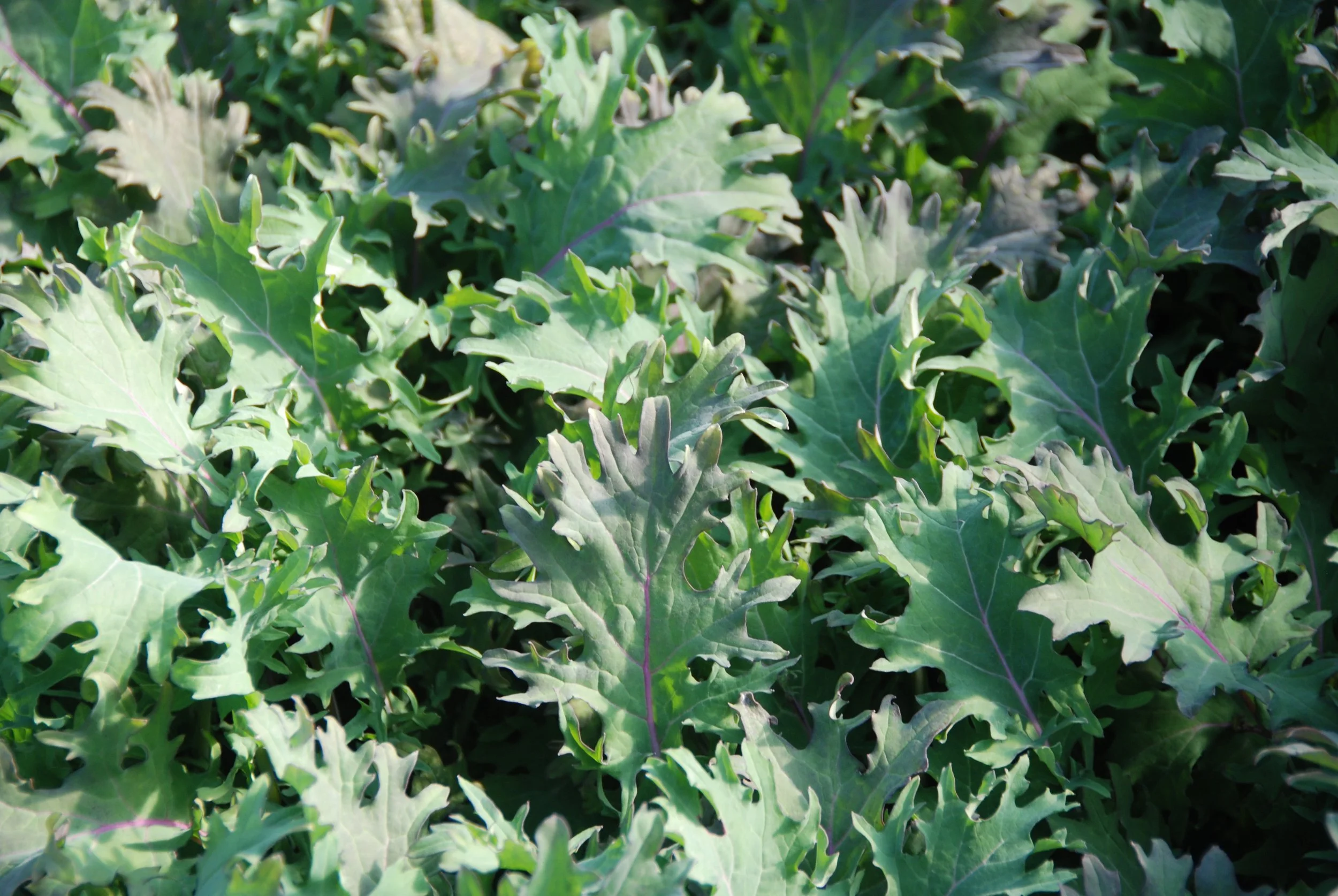
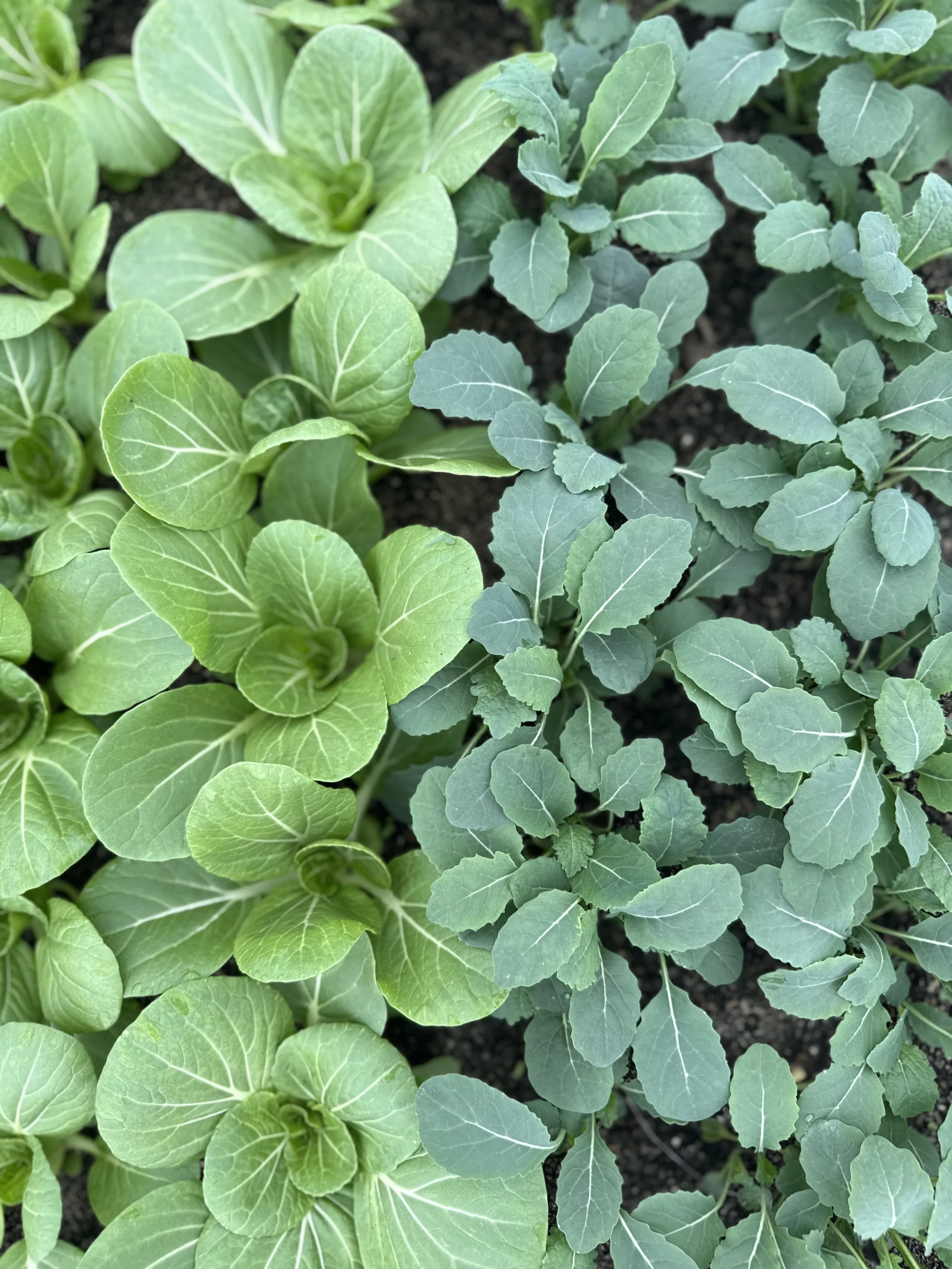
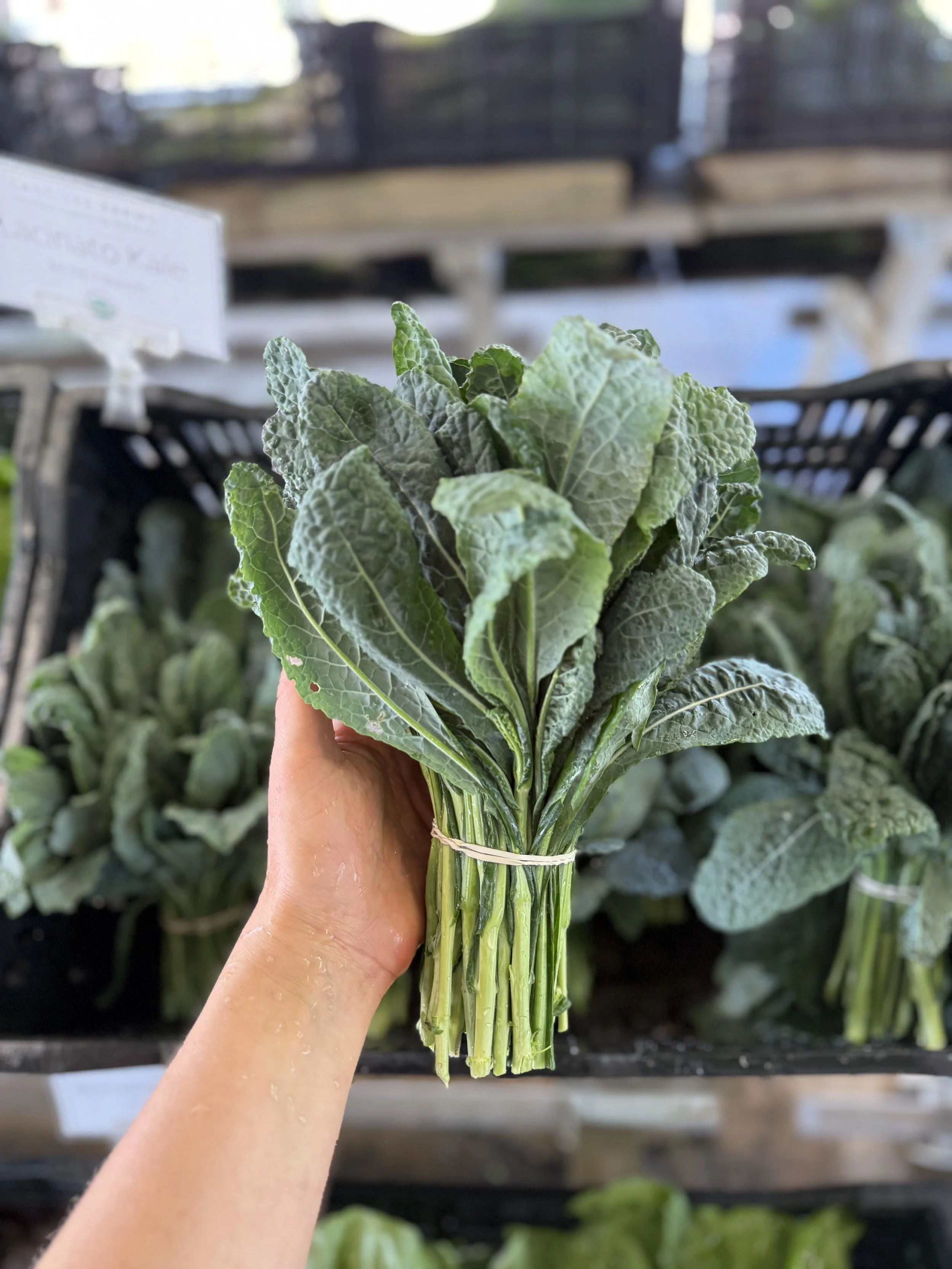
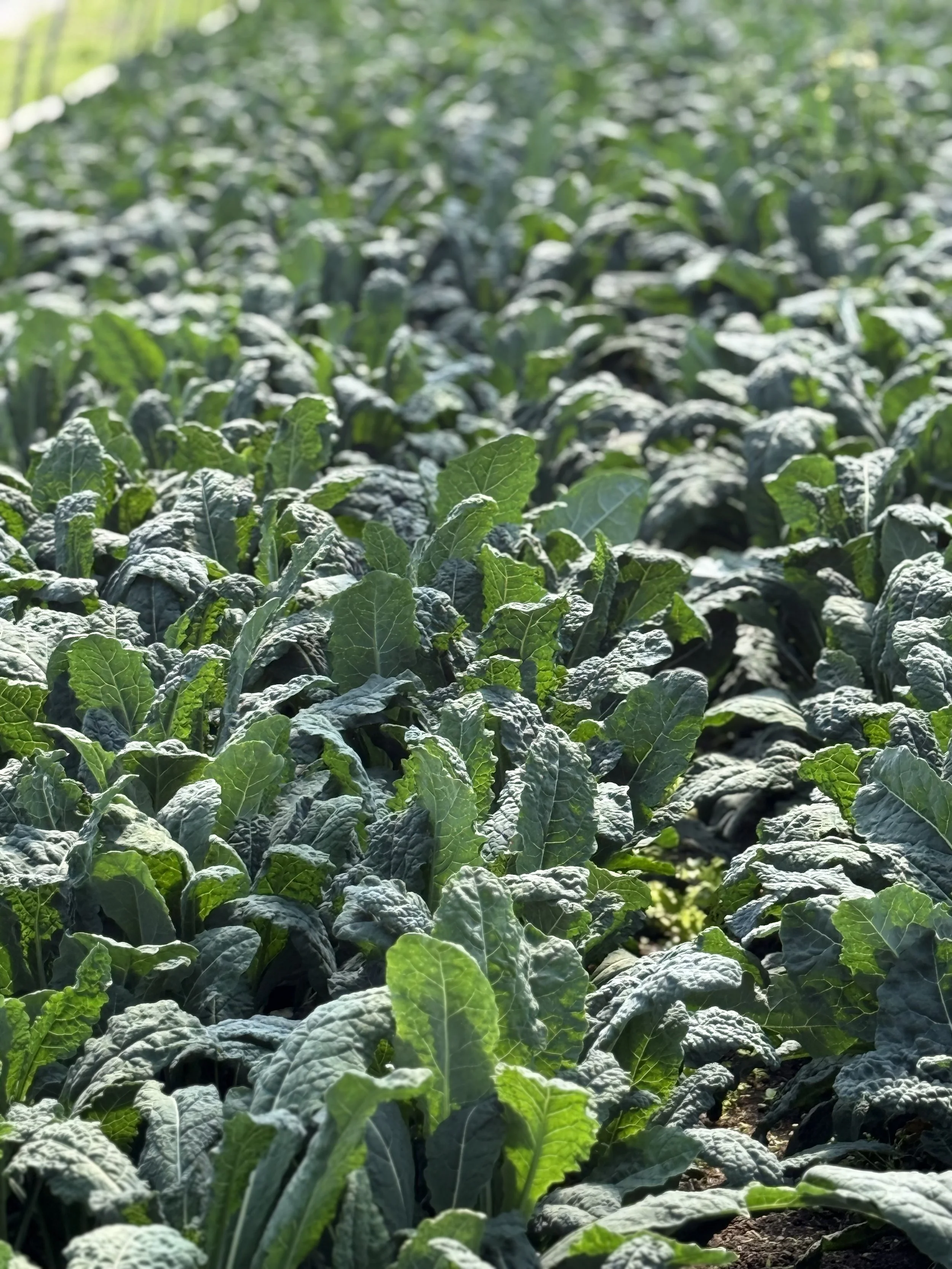
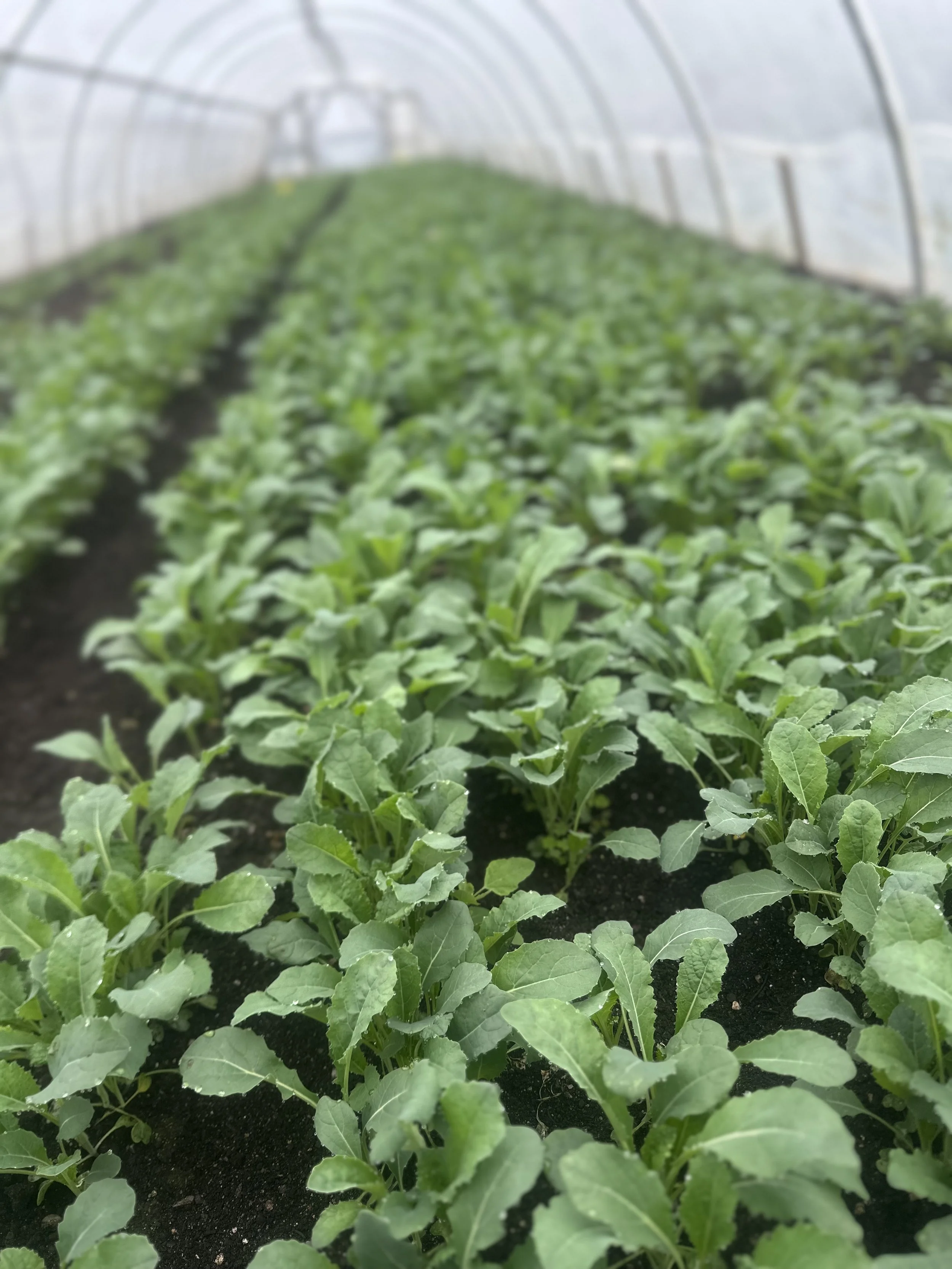
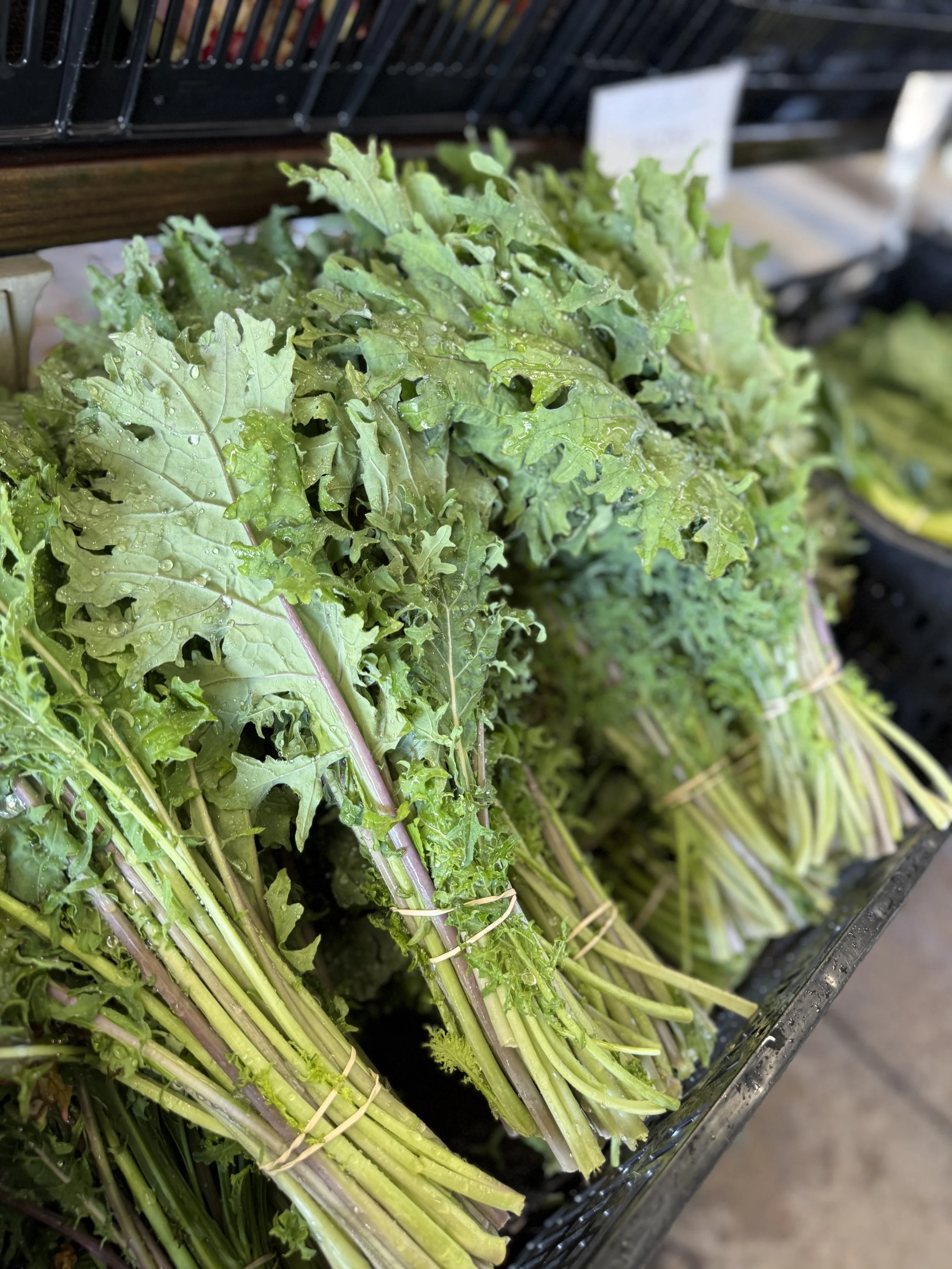
Kale (Brassica oleracea, variety acephala) belongs to the Brassica family, with it’s variety name acephala coming from Latin, meaning "without a head" — since the leaves grow loosely rather than in a tight bulb! While other greens tends to wilt and die at signs of a frost, Kale’s sugar content increases due to it’s heartier leaves, making it a Fall and Early Winter favorite. We grow two varieties, Lacinato (also called Tuscan) and Red Russian (also called Ragged Jack)!
In season: Late March to December
Nutritional value: Kale is an excellent source of vitamins K (one cup is 80% your DV!), C and A. It is also a great plant-based source of calcium, and provides a good amount of potassium, manganese, copper, and folate. Like it’s leafy green counterparts, Kale is loaded with antioxidants such as beta carotene, flavonoids and polyphenols. These all counteract oxidative damage by neutralizing free radicals in the body — which all means… eat more Kale!
Storage tips: Kale has longer shelf life than other greens — it can store for up to two to three weeks! The best way to ensure they last this long (that is if you don’t gobble them up within a day or two) is to wrap the leaves in a moist cloth or paper towel and store them in a perforated plastic bag in the crisper drawer of your refrigerator. With any greens, the key is controlled moisture and airflow!
Culinary uses: Use Kale the way you would any other leafy green — steam, sauté, braise, add it to soups, eat it raw or massaged! We personally love it thinly chopped and added to our morning eggs, or as a base for a hearty salad!