
RAINBOW CHARD
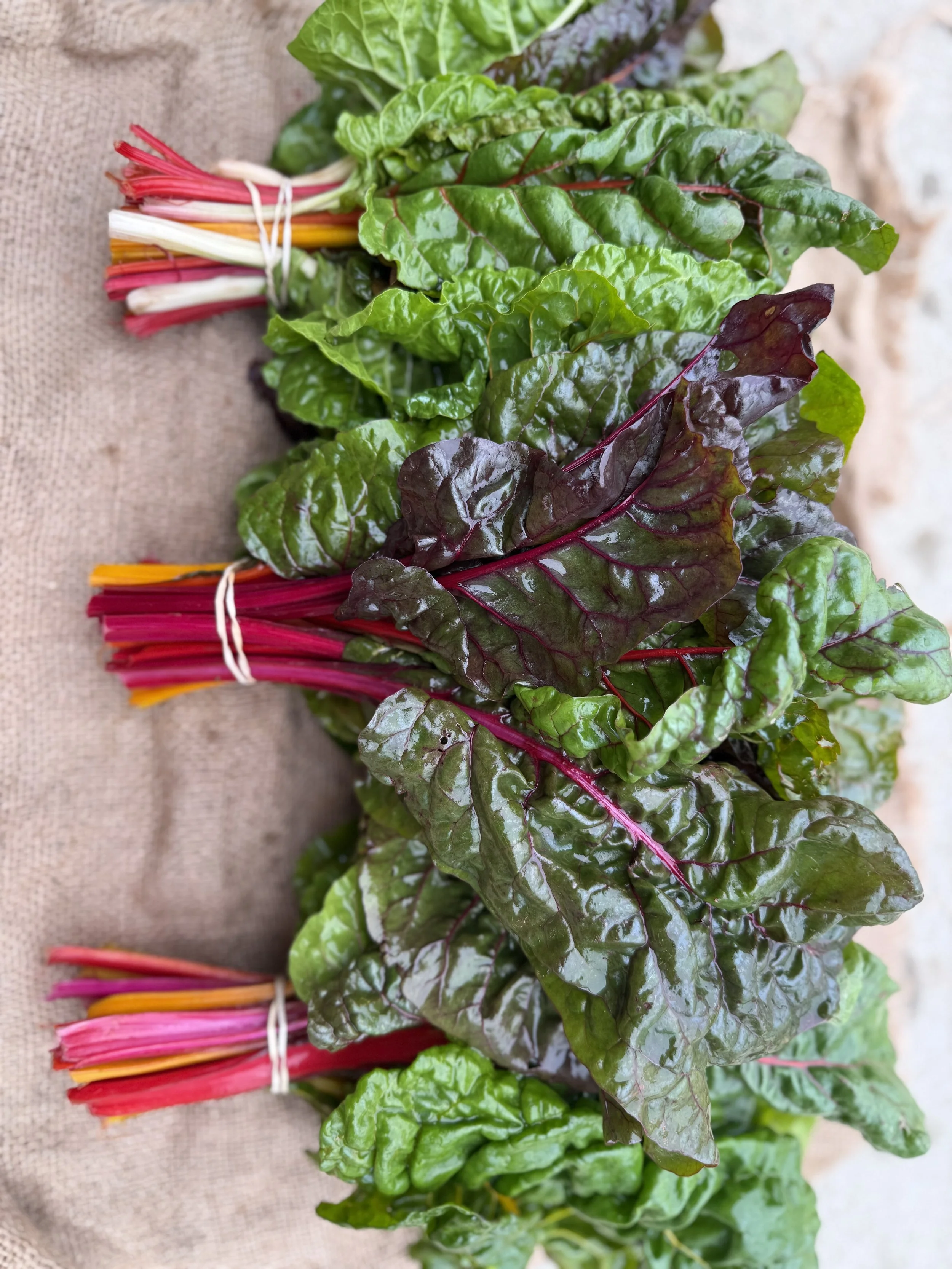
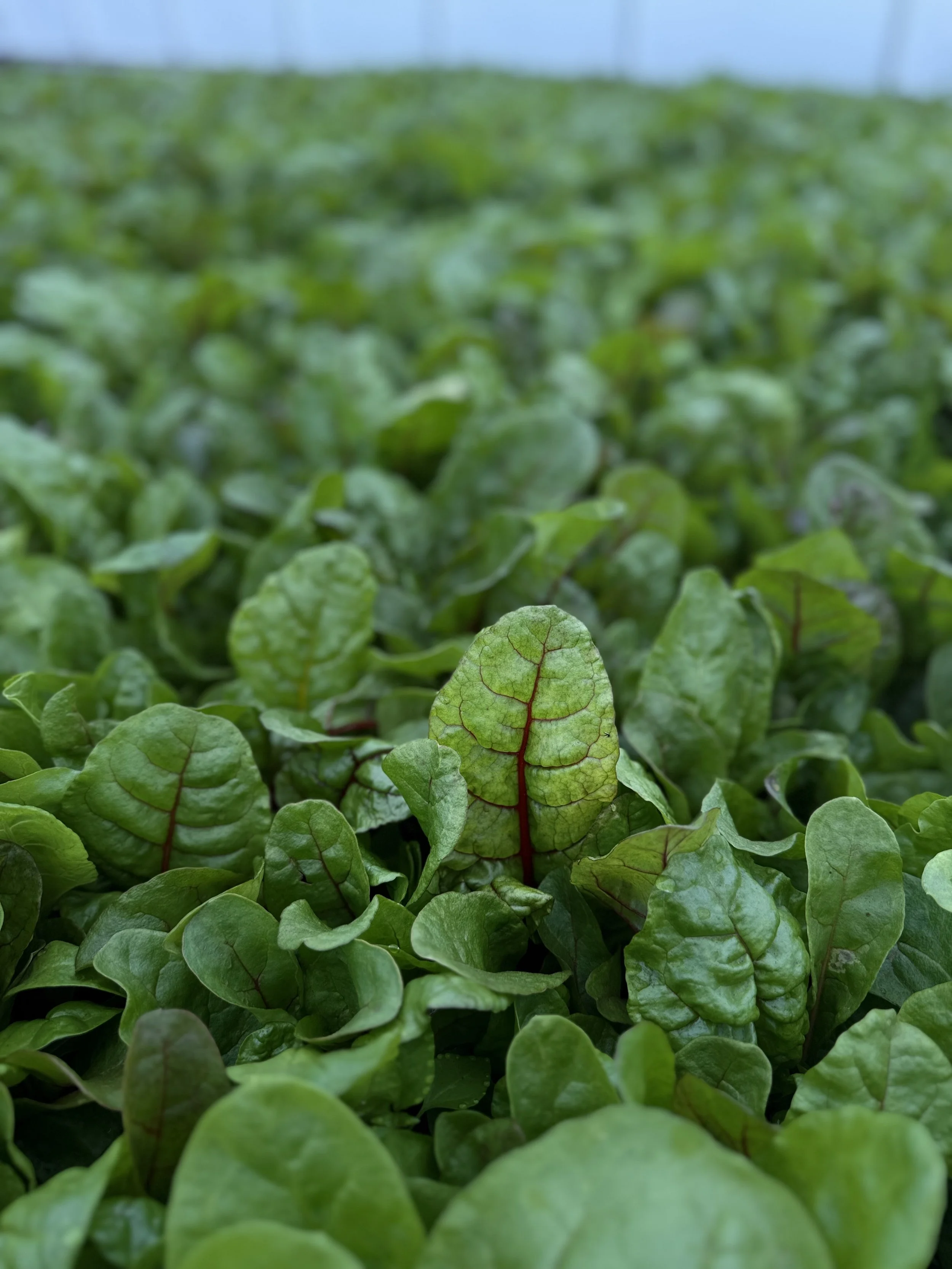
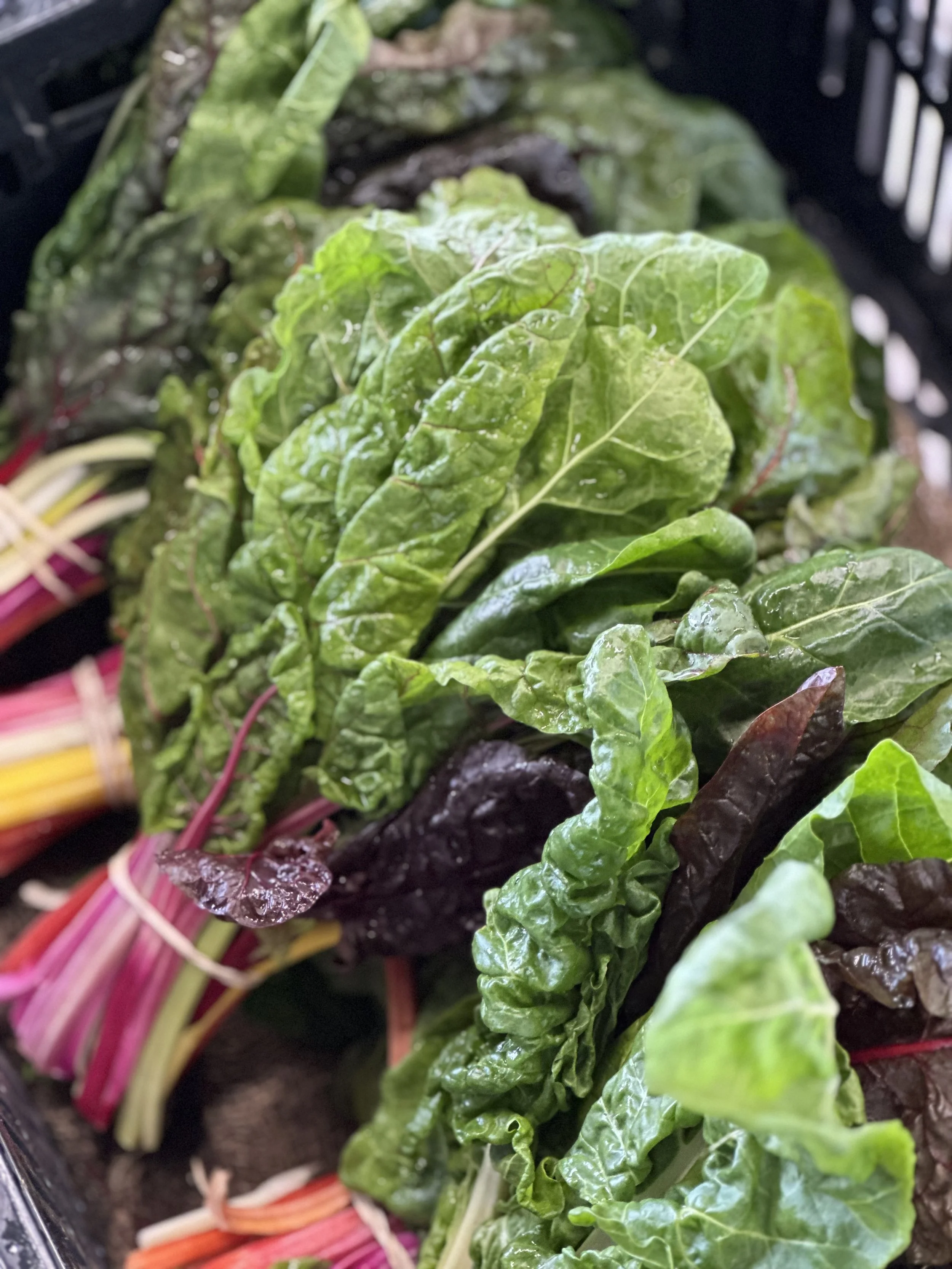
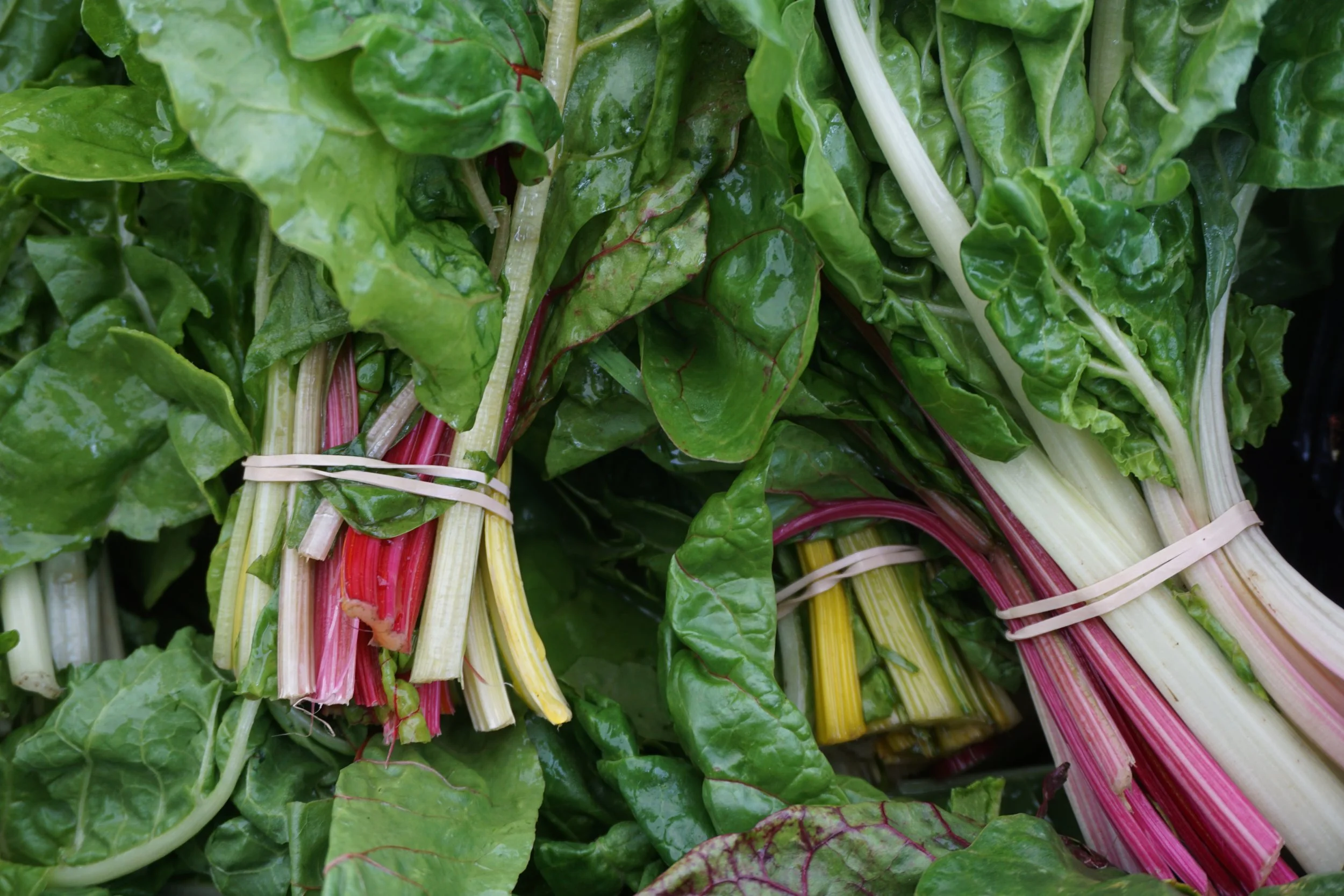
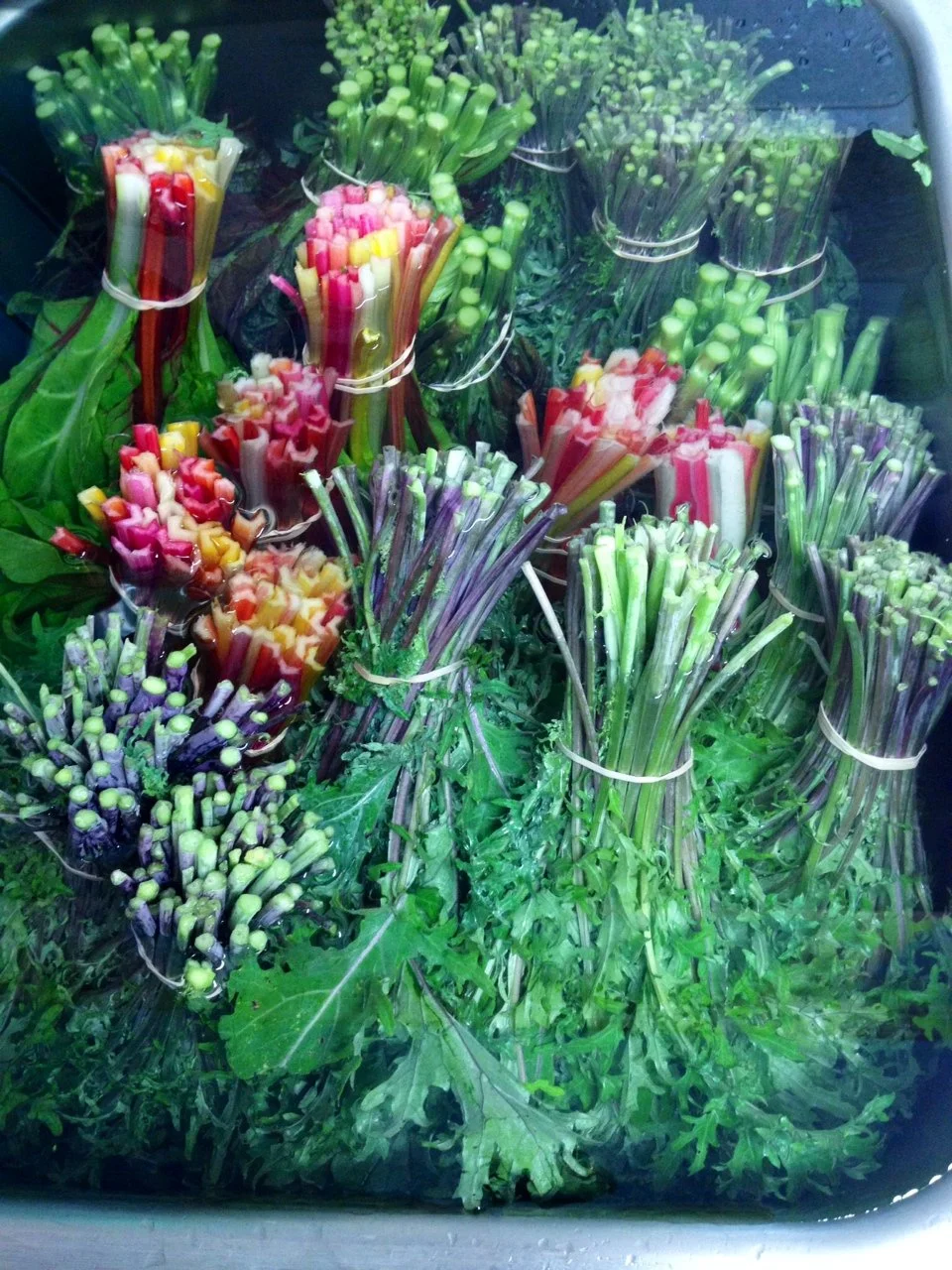
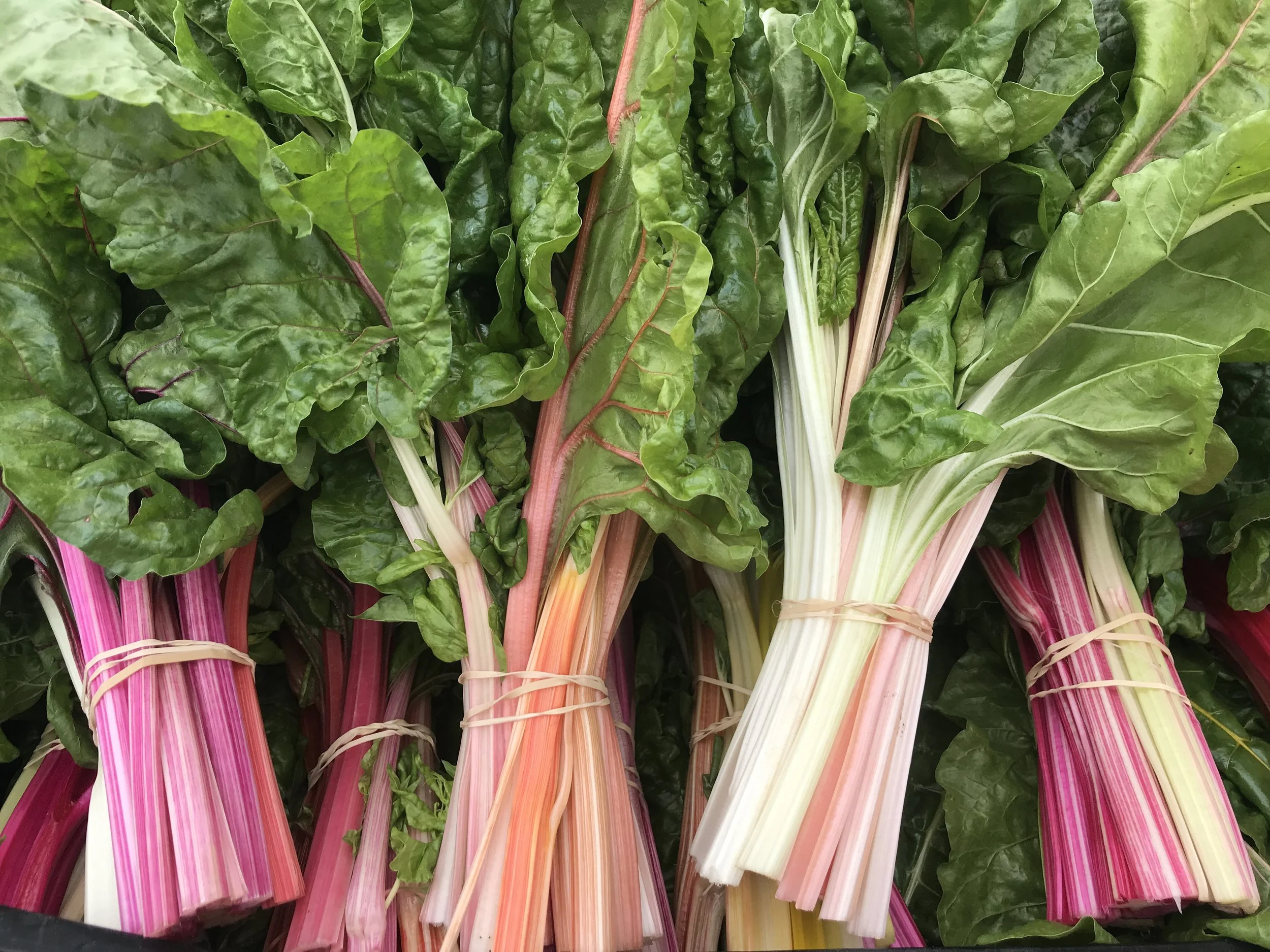
Rainbow Chard (Beta vulgaris) is a member of the Amaranth family cultivated for it’s edible leaves and stalks. The cultivar of Chard that we grow is marketed as Rainbow Chard due to its colorful stalks of red, orange, yellow, pink, white and pale green — talk about eating the rainbow! Chard is a cut-and-come-again plant, allowing us to enjoy multiple harvests from the same plant.
In season: April to November
Nutritional value: Rainbow Chard is chock full of micronutrients. It is an excellent source of potassium, magnesium, calcium, and iron (one cup is 30% your DV)! Like it’s leafy green counterpart, Kale, it is high in vitamin K — a 2-cup serving provides 498% your daily value (yes, you read that right, nearly 500% your DV)! It is also loaded with antioxidants such as carotenoids like beta-carotene, lutein, and zeaxanthin, as well as flavonoids. Don’t pass on this nutrient powerhouse of a vegetable!
Storage tips: The best way to ensure that your Rainbow Chard will last in the fridge is to wrap the leaves in a moist cloth or paper towel and store them in a perforated plastic bag in the crisper drawer of your refrigerator. With any greens, the key is controlled moisture and airflow! Alternatively, you can stand the Rainbow Chard upright in a jar with a few inches of cold water, like a bouquet, and loosely drape a plastic bag over the leaves and place in your refrigerator!
Culinary uses: Use Rainbow Chard the way you would any other leafy green — steam, sauté, braise, add it to soups, eat it raw or massaged! Think of it as a cross between Kale and Spinach, with a salty earthiness akin to Beet greens.